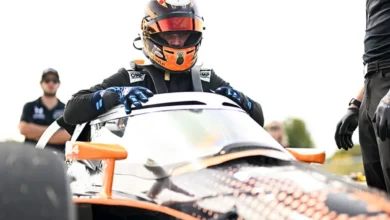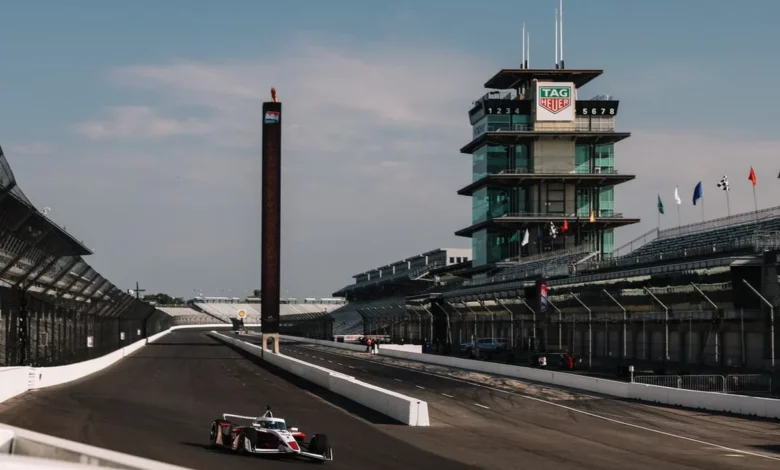
Alexander Rossi drove IndyCar’s new car around the Indianapolis Motor Speedway oval on Wednesday and reported that it felt like the old one. On the face of it that is a disappointing headline for a chassis two years from racing. It is also close to the best thing IndyCar could have heard.
The first oval laps for a car that races in 2028
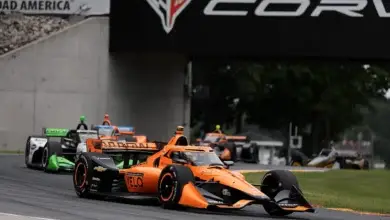
The IR-28 has been on track before, at its public debut on the Indianapolis road course in August, a test that stretched to three days because of rain. Wednesday was the first time it has run in superspeedway configuration, and the first real look at whether the design works where IndyCar cars are hardest to get right.
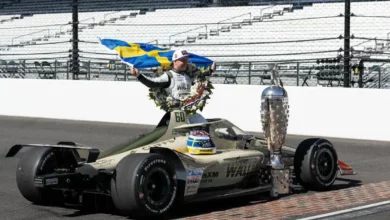
Rossi, the 2016 Indianapolis 500 winner, took the first day for the Chevrolet teams. Alex Palou, who won the 500 in 2025, takes over for Honda on Thursday. Temperatures at the Speedway climbed into the low nineties.
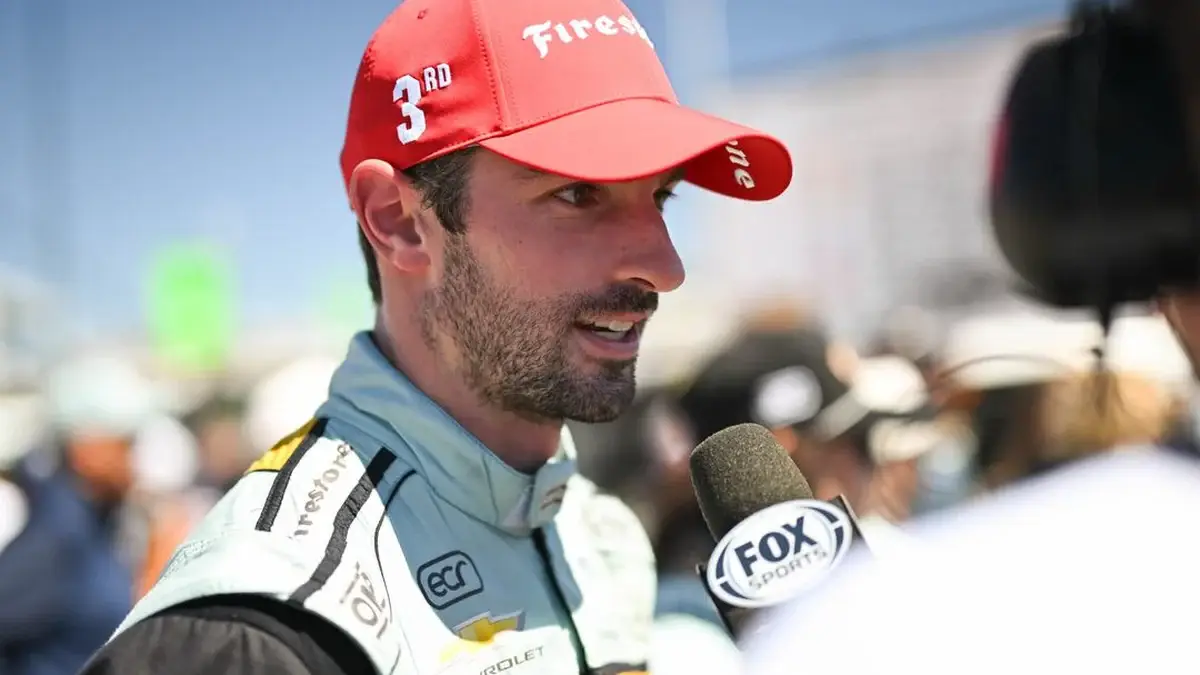
“It does everything that INDYCAR SERIES machinery should do around here,” Rossi said. “We got through some basic mechanical and aero changes to kind of understand the offsets that they’re going to present to us in a couple of years, and there was no surprise. It was really pretty standard.”
They sent him out with no setup changes and he went flat
The detail that stands out came from Mike O’Gara, IndyCar’s vice president of competition and race engineering.
“Obviously, Dallara took everything they knew from the DW12 and put it into this car,” he said. “Immediately, without honestly changing any setup on it, Alex went out and was flat on the throttle and very comfortable.”
For a first oval run on a brand new chassis, that is not a small thing. The Speedway is where aerodynamic and mechanical mistakes announce themselves immediately and expensively.
The car it has to beat has had fourteen years of development
Rossi was careful to frame what a lack of drama actually means here.
“I wouldn’t say there was anything drastically different from this car to the current car that we have,” he said. “Some subtle things here and there if you’re really nitpicking at it, but, in general, I think it’s important to remember that the current-generation Speedway car that we have around here is pretty dialed and it’s pretty good.”
That is the real measure. The DW12’s superspeedway package has been refined since 2012. The IR-28 starts that process from nothing and, on day one, is already in the same conversation.
“I don’t think that there needs to really be any major glaring issues,” Rossi added. “It’s all just early days and trying to get time on it and understanding what little adjustments do here and there.”
A hundred pounds lighter, with fourteen times the energy storage
The IR-28 is roughly 100 pounds lighter than the car it replaces, which changes the power to weight ratio without touching the engine. The 2.4 litre twin turbo V6s from Chevrolet and Honda produce up to 760 horsepower.
The bigger change is the hybrid system. The battery based energy storage unit holds approximately fourteen times the energy of the supercapacitor system currently in use, and the whole power unit package is about 20 pounds lighter.
Safety work went into the cockpit and the sides: wider internal dimensions to fit a greater range of driver sizes, better internal airflow for cooling, and a redesigned side structure that absorbs more energy in an impact while keeping the car more likely to stay grounded.
The aerodynamics are meant to improve stability and cut the disadvantage a car suffers when following another closely. That last objective is the one IndyCar most needs to deliver on, and it is also the one Wednesday could say nothing about. Rossi was alone on the track.
Crawl, walk, run
IndyCar is running this test deliberately slowly. O’Gara described the approach as crawl, walk, run: use the early laps to learn how the car answers changes before anyone starts chasing lap time.
He also mentioned something that will matter more to teams than to fans. “Super happy with how easy the car is to work on,” he said. “It’s very intuitive.” A car that mechanics can change quickly between sessions is worth real time over a season.
Palou finished fifteen minutes early
Alex Palou took over on Thursday, and the most telling detail of his day is that he stopped before he had to. The team worked through every item on its checklist with fifteen minutes of track time still available, so it parked the car.
“Very fun,” Palou said. “At the beginning, it was super fun because it’s a new car and you’re back at the Speedway. Then you’re like, ‘Can we go faster?’ It’s still super fun. I’m testing the new car at the Speedway.”
He also got more out of the day than he expected. “We got a lot more laps than I expected with the weather, and the car felt good,” he said. “We actually got quite a lot of speed. We improved over 2 miles an hour throughout the day, and we didn’t really work too much to get it.” Roughly three km/h found without chasing it is not a performance claim. It does suggest the car responds predictably when engineers change something.
The weather handed them a bonus. Rossi ran on Wednesday in temperatures that climbed into the low thirties Celsius with high humidity. An approaching cold front dropped the temperature by around five degrees overnight, which gave IndyCar a second set of environmental conditions to measure the same car in without asking for it.
The driver split was deliberate. Rossi drove for ECR and represented the Chevrolet teams, Palou drove for Chip Ganassi Racing and represented Honda. Both qualified on the front row for this year’s Indianapolis 500, Palou first and Rossi second, and both have won the race. IndyCar could not have picked a better calibrated pair of references.
Palou was blunt about how little he knew of the other half of the programme. “I don’t really know what he did,” he said of Rossi. “I think he did a lot of basic stuff. Even us, we did a lot of basic stuff and trying to get a lot of data for Dallara itself to try and see what the car is doing when we get like crazy ride heights up, down, like just trying to get like basic numbers.”
That is the whole test in one answer. Two days of ride heights, aerodynamic configurations and baseline numbers for Dallara, run one car at a time.
Our view: the interesting test is the one with two cars on track
Everything reported from these two days is encouraging and almost none of it addresses the reason this car exists.
The DW12 works. Nobody replaced it because it was slow or unsafe. It was replaced because it is fourteen years old and because following another car in dirty air costs more than it should. A single car running alone at Indianapolis cannot tell you whether that has been fixed. It can only tell you the new car is not broken, which is what Rossi confirmed.
Palou’s day added a second manufacturer’s perspective and a second driver’s reference, and it still ran one car at a time. The test that matters is the one where two IR-28s run nose to tail into Turn 1 and somebody measures what the following car loses. Until that happens, this is a promising start to a project whose central promise remains untested.
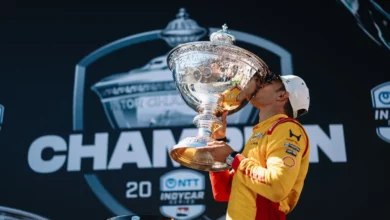
The car races for the first time at the start of the 2028 season. Its two test drivers go into that wait with very different records: Rossi as the 2016 Indianapolis 500 winner, Palou as a five-time champion who wrapped up the 2026 title at Milwaukee with a round still to run.
The RNT Weekly newsletter
Race weekend times, results and our best stories in your inbox. Free, and you can unsubscribe at any time.