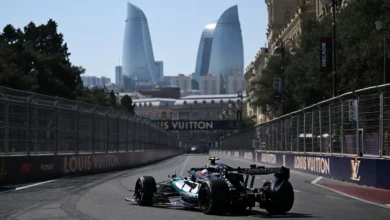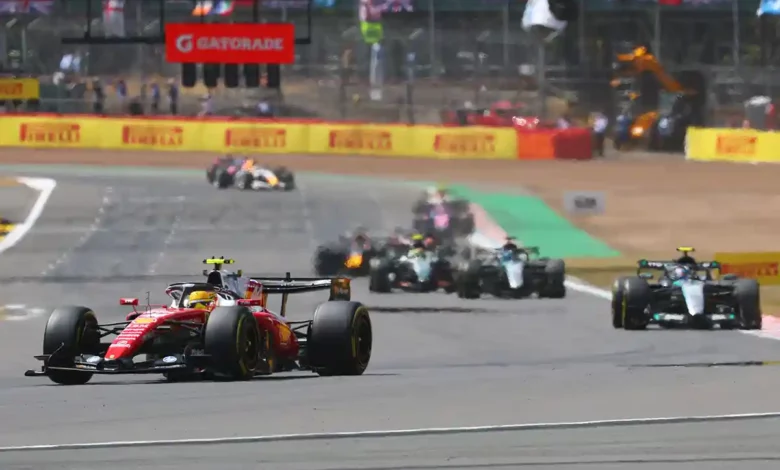
Ferrari now has a description of what went wrong on Lewis Hamilton’s car in Madrid, and it is an uncomfortable one. The brake pedal went long, the team tried to work around it from the pit wall, and a couple of corners later it happened again. What Ferrari does not have, four days on, is a cause.
In this article
- A long pedal, a fix from the pit wall, and then it happened again
- Turn 5, too much speed, and a brush with the barrier
- Not the brakes themselves, the parts around them
- The FP3 crash is not the explanation
- Thirteen rounds of points, ended by a part nobody has named
- Our impression: the decision to stop him was the right one
- Baku is the worst possible place to still be guessing
A long pedal, a fix from the pit wall, and then it happened again
Fred Vasseur has been straightforward about it. “The pedal was long. We tried to fix it from the pit wall, and then it happened again a couple of corners later,” the Ferrari team principal said. A long pedal is the symptom every driver dreads, because the travel keeps increasing and the stopping power does not arrive when the foot expects it.
Asked immediately afterwards what had actually broken, Vasseur did not pretend. “Honestly, I don’t know, because they were working on the car when I left,” he said, and later: “At this stage, we don’t yet know the exact cause of the brake system issue that forced him to retire. But we will investigate it thoroughly.”
That last sentence is the story. Ferrari has opened a full investigation into a failure it cannot yet name, on a car that was running in the points, in a season whose title fight it has already effectively lost.
Turn 5, too much speed, and a brush with the barrier
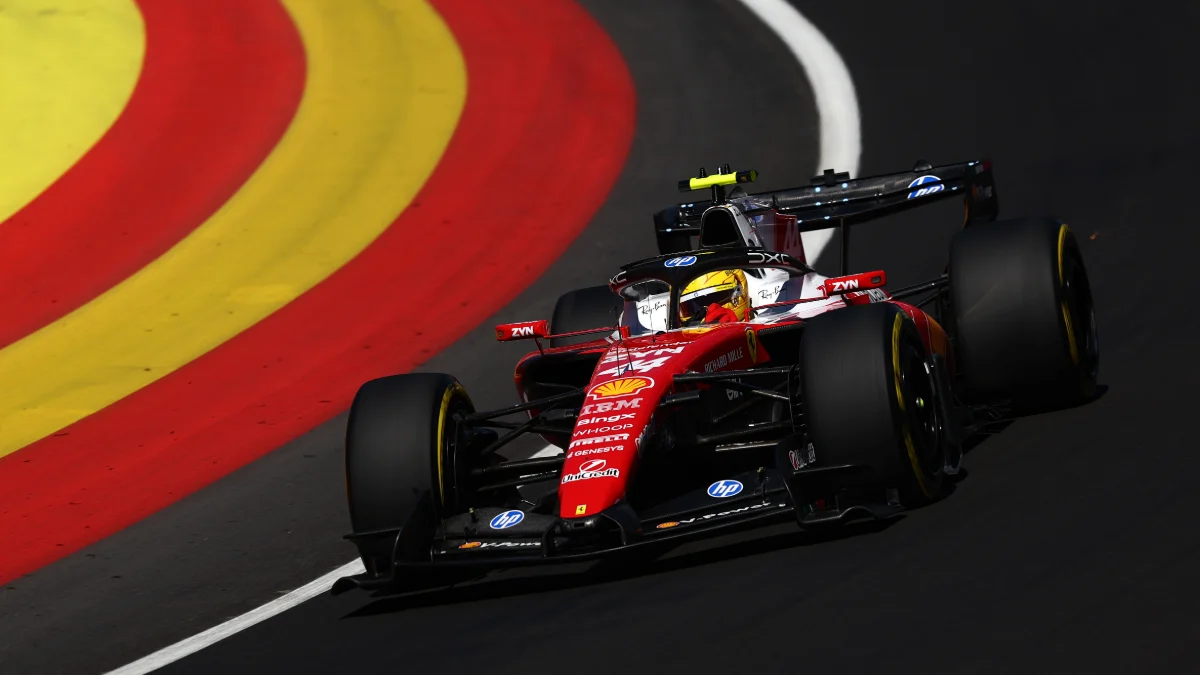
The sequence matters, and it now matches what we described from our own viewing on Sunday. The pedal dropped under braking at Turn 5. Hamilton could not slow the car the way he had the lap before, ran wide, and touched the barrier on the way out. The contact was the consequence, not the cause.
Hamilton’s own account fills in the feel of it. “Then the pedal took a step, and I ended up carrying loads of speed into the corner because it didn’t stop as well,” he said. “And then all of a sudden the pedal just went fully to the end.”
He was called in and retired on lap seven, after six completed laps. Vasseur did not dress up the reasoning: “Staying on track made no sense in a crazy race. We didn’t want to take any risk.” At a circuit with 22 corners and walls on both sides, that is the only answer available.
Not the brakes themselves, the parts around them
The early direction of the investigation, as reported from inside the paddock, points away from the braking system proper. The indications are that the primary system was not at fault, and that the problem sat in the ancillaries around it, the parts that feed and support the brakes rather than the mechanism that does the stopping.
That is consistent with the symptom. A pedal that travels further than it should, intermittently, and then goes all the way to the floor, is the classic signature of pressure that is not being held somewhere in the circuit. It is also the reason Ferrari cannot simply point at a component and replace it. Intermittent faults are the hardest kind to close out, because the part usually works when you test it on the bench.
The FP3 crash is not the explanation
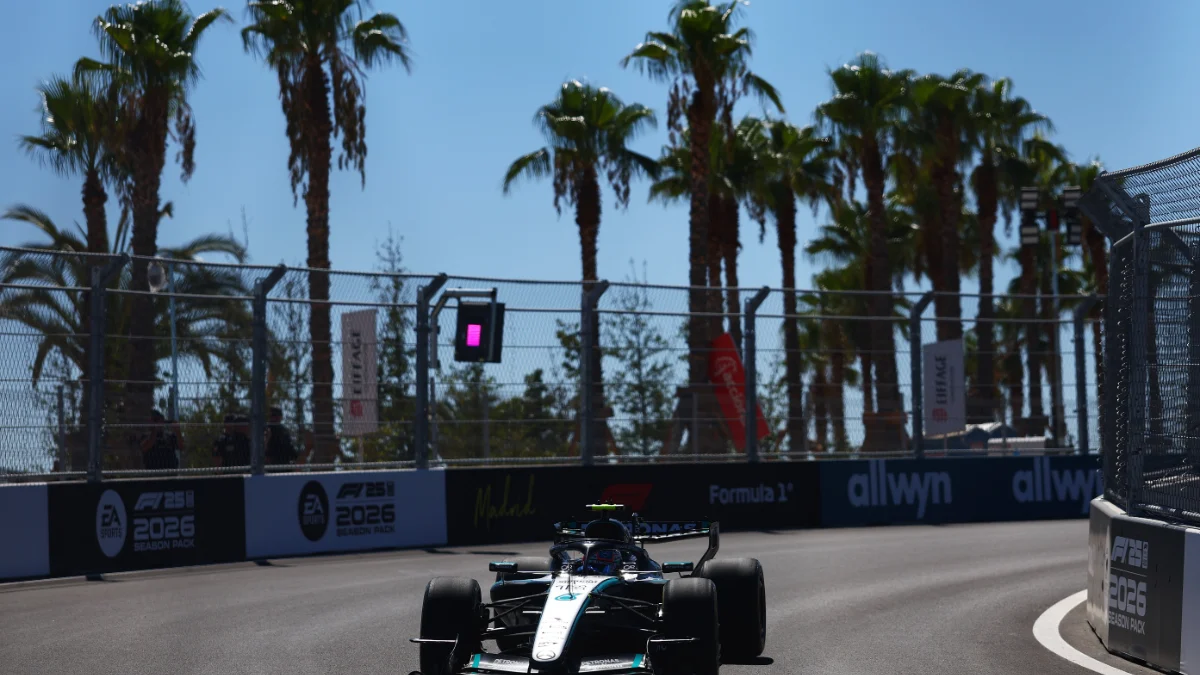
The obvious suspicion, given Hamilton had crashed in final practice at the same circuit and the car was rebuilt around him, is that the repair was involved. Ferrari’s early reading does not support that. The failure is understood to sit in the rear braking system and to be unrelated to the FP3 damage.
We would treat that as a working position rather than a conclusion. Until the investigation names a part, “unrelated to the crash” is a statement about where the team is currently looking, not a finding.
Thirteen rounds of points, ended by a part nobody has named
Before Madrid, Hamilton had scored in all thirteen rounds of the season. That is the run this failure ended, and it is the reason the retirement stings beyond the points it cost on the day. He is now 101 points behind Kimi Antonelli, and the mathematics of his title challenge stopped being interesting some time ago.
Our report on the retirement itself, written on the day, is here.
Our impression: the decision to stop him was the right one, and it was quick
It would have been very easy for Ferrari to leave him out. He was running, the pedal had come back once already, and a retirement in a chaotic race costs a team points it can see disappearing in real time. They brought him in anyway, and they did it before the second occurrence turned into something worse.
Teams do not always make that call that fast. This one did, and on a circuit where the run off is a wall, that deserves saying out loud even in a week when almost everything else about Ferrari’s season reads badly.
Baku is the worst possible place to still be guessing
The next round is Azerbaijan on 24 to 26 September, and Baku is the heaviest braking circuit on the calendar. Two kilometres of full throttle into a 90 degree left hander, repeated for the whole race, with walls the entire way round. If Ferrari has not identified the failed part by then, the question will not be whether Hamilton can win. It will be whether he trusts the pedal.
The current championship picture is on our Formula 1 standings page, and if you want the technical background on how modern brake systems work, our explainer on ERS covers the part of the rear axle that makes all of this more complicated than a pedal and a caliper.