Verstappen needed 15 laps to pass 100 karts, and a Dutch journalist was the last one standing


Max Verstappen started 101st and needed fifteen laps to overtake one hundred karts at Silverstone. He was given thirty. He also never touched the one shortcut the rules handed him, and the last person still in front of him at the end was a Dutch newspaper journalist.
In this article
- Sixty four karts on the opening lap
- Fifteen laps, half the distance, and the forecast thrown away
- He admits he was worried when he saw where he had to start
- The last man standing was a reporter from Limburg
- The shortcut was an insurance policy, not an overtaking aid
- Verstappen never used his own
- Our takeaway: this was a harder test than it looked
- The other thing it proved is about Jacky Martens
Sixty four karts on the opening lap
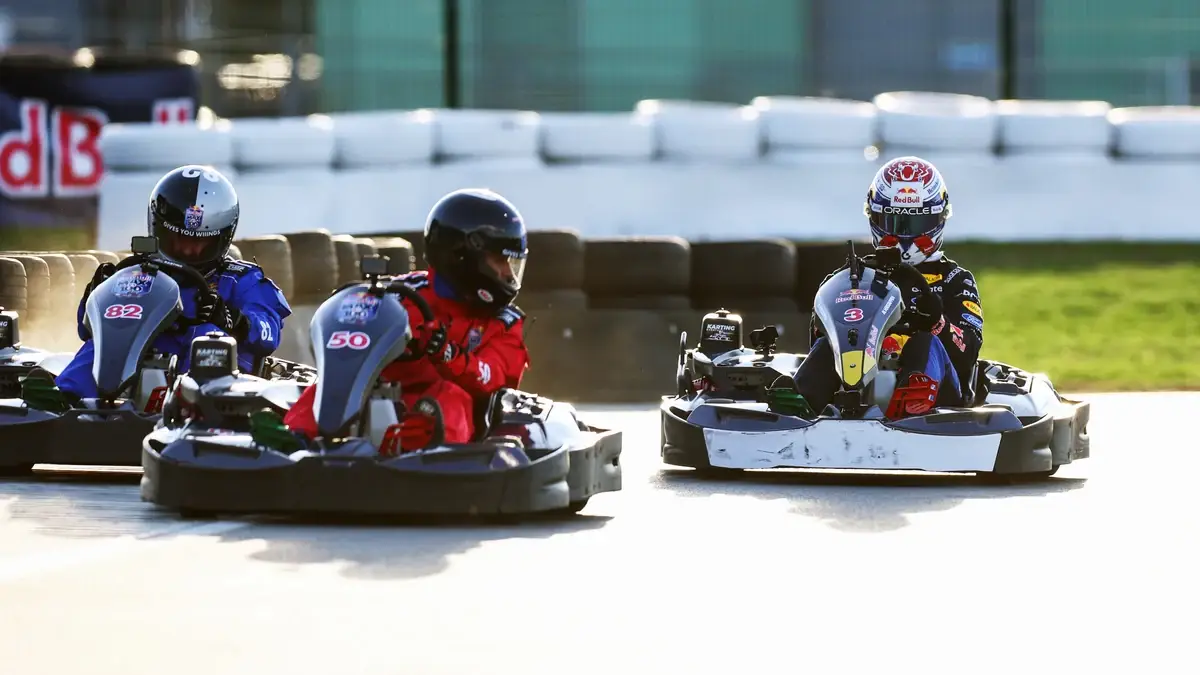
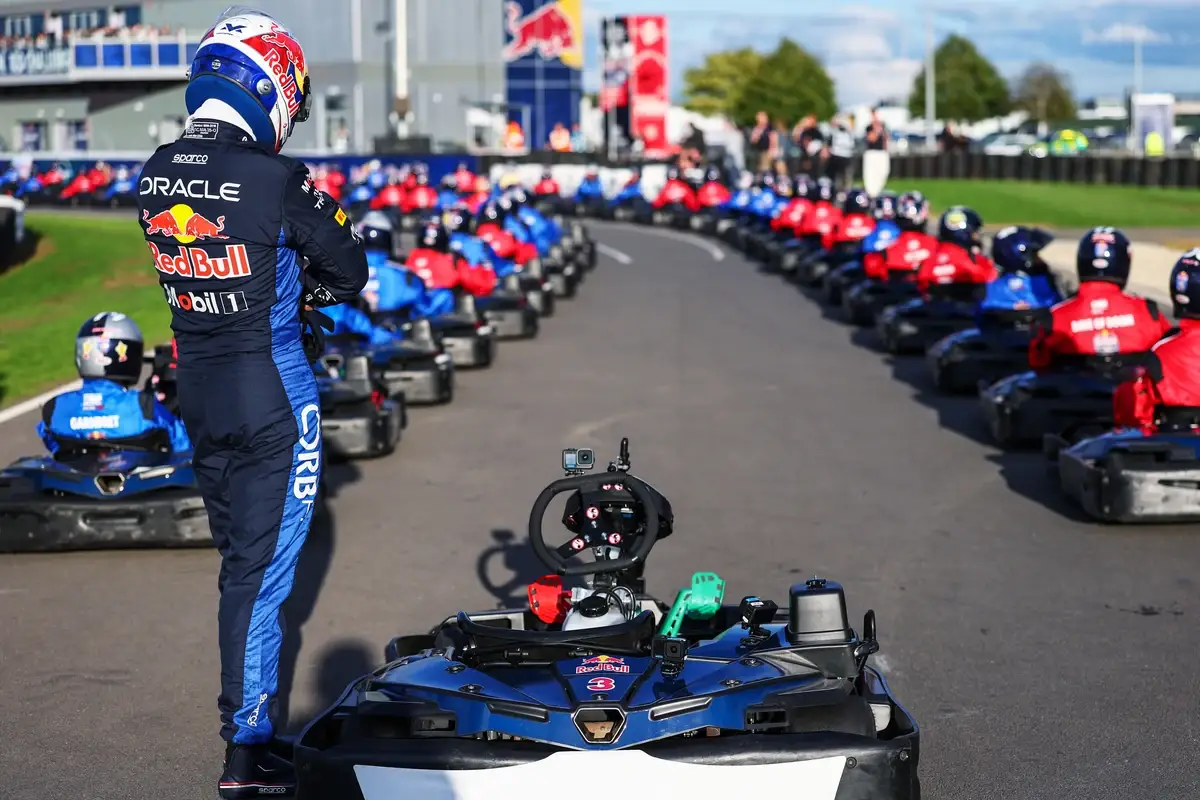
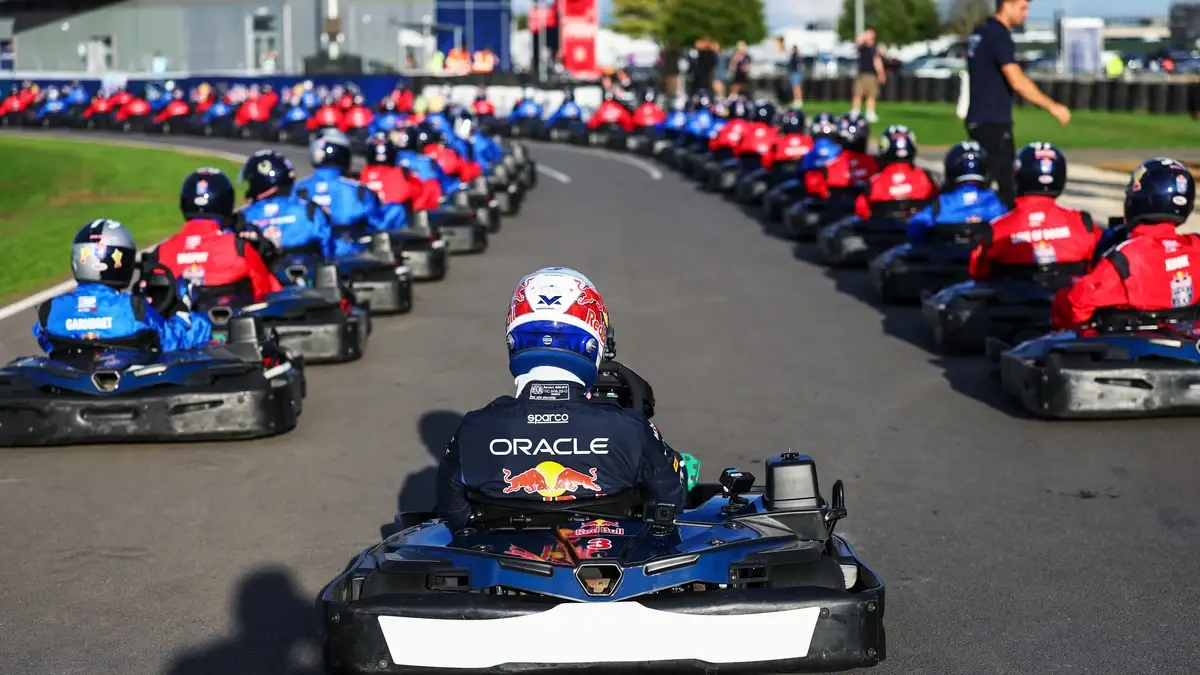
The opening lap decided the shape of the evening. Verstappen came from the very back and was 37th by the time he crossed the line for the first time, which means he had cleared 64 karts in a single lap. A safety car neutralised things shortly afterwards, and by then the damage was already done.
By lap three he was 25th. By lap six he was ninth. Ninety two of the hundred were gone in six laps, and the broadcast, whose own modelling had suggested this would take him something like an hour, was left recalculating on air.
Fifteen laps, half the distance, and the forecast thrown away
He completed the job in fifteen laps, exactly half the scheduled race. Around thirty five minutes had elapsed. There was no late drama, no spin in traffic, and no moment where the maths stopped working, which is the part that will annoy the hundred most.
The final four read Verstappen, then Jacky Martens, then Lewis Osler of Red Bull Powertrains, with the YouTuber Zac Alsop fourth.
How it finished
- 1. Max Verstappen
- 2. Jacky Martens, journalist, De Limburger
- 3. Lewis Osler, Red Bull Powertrains
- 4. Zac Alsop, YouTuber
He admits he was worried when he saw where he had to start
Red Bull put out his own account afterwards, and the first line of it is the one that matters. “When I went to the grid and I saw where I had to start, with 100 karts in front of me, I was a little bit worried,” Verstappen said. “After my first lap with all the carnage, I did think, ‘Okay we have got this under control’!”
That is a neat bookend. Before the start, asked what he was looking forward to most, he had answered: “Just seeing the carnage unfold in front of me.” He got it, and it took him a single lap to decide it was manageable.
“It started to become really fun and once I started getting into a rhythm and was able to overtake them one by one and saw the gap closing, that was really exciting,” he said. “It was great to just be in a go-kart again and go back to basics, it reminded me of racing back in the day. It’s a really beautiful track and well designed and it was a nice touch to be able to get all the data fed through the radio too. I had a great day and it was good to come out with the win!”
The last man standing was a reporter from Limburg
Of the hundred people invited to hold Verstappen up, the one who did it best was Jacky Martens, a journalist with the Dutch regional newspaper De Limburger. He led the race outright for a long stretch. When Verstappen finally came through, Martens moved across to defend and was already beaten to the point.
Then he played his shortcut and came back out in front of him, which is the moment the whole format suddenly made sense. He held on to second all the way to the flag, ahead of ninety eight other people, several of whom race for a living or something close to it.
We watched that live and we are still slightly startled by it. If you had offered odds before the start on a regional newspaper reporter being the last obstacle between Max Verstappen and a hundred eliminated karts, nobody would have taken them.
The shortcut was an insurance policy, not an overtaking aid
Every one of the hundred was given one shortcut, a section of the circuit they were allowed to cut once. The pre-race explanations framed it as a way to gain time, something you spend when the man behind starts closing.
That is not how it worked. Because a driver who had already been passed could use their cut to rejoin ahead of Verstappen, the shortcut was really a second life. Spend it early, as Osler did when Verstappen was still four seconds back, and you buy yourself a lap. Keep it until after you have been passed, as Martens did, and you put yourself back in the race.
Three of them worked out the other half of it too. The leading trio began openly cooperating to keep Verstappen behind, which was the only rational thing left to do. It bought them a few corners. He was lapping roughly three seconds quicker than they were.
Verstappen never used his own
He had one. He did not use it. He went from 101st to the front of a hundred kart field without once taking the cut that was there for exactly this situation, and he did it in half the allotted distance.
That detail is the one worth keeping, because it is the only clean measurement the evening produced. Strip out the novelty and what is left is a driver who had to make a hundred passes in heavy traffic against people who did not behave predictably, and who did it without needing the help he was offered.
Our takeaway: this was a harder test than it looked
It is easy to file this under entertainment, and Red Bull built it as entertainment. But a hundred karts on one circuit produce something a Grand Prix almost never does, which is real unpredictability from the cars you are passing. A backmarker in Formula 1 knows the flags and moves. A content creator on lap two does not.
Verstappen spent the first six laps threading through people who braked in odd places and held lines they should not have held, and he did not hit anybody. That is the skill the format actually tested, and it is not the same skill as being quick.
The other thing it proved is about Jacky Martens
Second place from a hundred, against athletes, streamers and people with racing licences, is not luck. He qualified well enough to start near the front, he was quick enough to lead, and he was clever enough to save his one card until the moment it was worth the most.
Our preview of the format, written before the start, is here. Verstappen’s Formula 1 season is on his driver page, and the current championship table is on our Formula 1 standings page.