Ferrari still does not know why Hamilton’s brakes failed, and Baku is eight days away
Fred Vasseur admits the cause was unknown immediately after the race, and now Ferrari faces a 101-point deficit to lead the title charge.

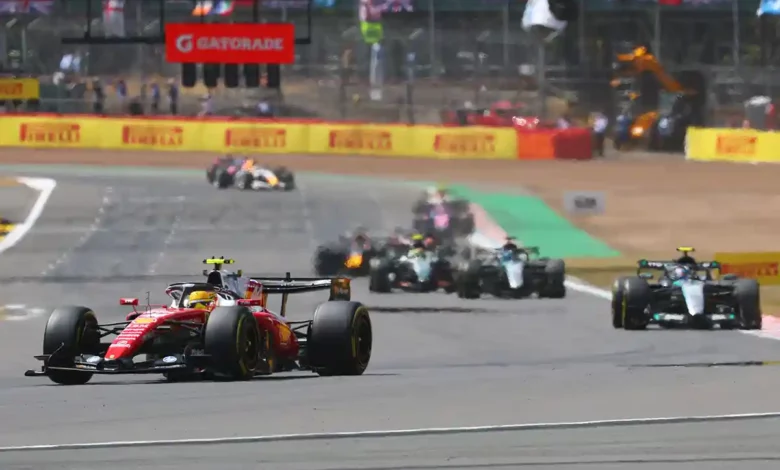
Ferrari has not yet found out why Lewis Hamilton’s brakes failed at the Madring, and it has eight days to do it. The Azerbaijan Grand Prix starts on 24 September at a circuit with one of the longest braking zones on the calendar.
In this article
- The pedal went long at Turn 5 on the first lap
- The touch on the barrier came after the brakes, not before
- Vasseur says the cause is not known yet
- Eighty per cent of this car’s development is already 2027 work
- The gap is 101 points and the streak that held it together is gone
- Our concern: Baku is a bad place to be wrong about a brake system
- Baku, on a Saturday, in eight days
The pedal went long at Turn 5 on the first lap
Hamilton started fourth and the problem arrived before the first lap was finished. “I was braking for Turn 5 on the first lap and the car was stopping normally,” he said afterwards. “Then the pedal took a step. And then all of a sudden the pedal just went fully to the end, so I was lucky to make it round.”
A pedal that travels further than it should is the classic symptom of a loss of pressure in the braking system, and it gets worse rather than better. Ferrari tried to manage it remotely first. “The pedal was long. We tried to fix it from the pit wall and then it happened again a couple of corners later,” team principal Fred Vasseur said. “Staying on track made no sense in a crazy race. We didn’t want to take any risk.”
Hamilton was called in and retired on lap seven, having started fourth and briefly swapped places with Max Verstappen before the car began to slow him down more than the corners did.
The touch on the barrier came after the brakes, not before
From trackside we saw Hamilton brush the barrier, and the obvious assumption is the wrong one. The contact did not break the brakes. The brakes put him into the contact.
The sequence runs the other way around: the pedal went long at Turn 5, he ran wide because the car would not slow, and he tapped the wall on the way out. Hamilton described it as not a bad touch. He also picked up track limits warnings in the same stretch, which is what happens when a driver is arriving at corners with less braking than he planned for.
That distinction matters for what Ferrari is looking for this week. A car that hits a wall and then loses its brakes is a damage story. A car that loses its brakes and then hits a wall is a component story, and component stories travel to the next race.
Vasseur says the cause is not known yet
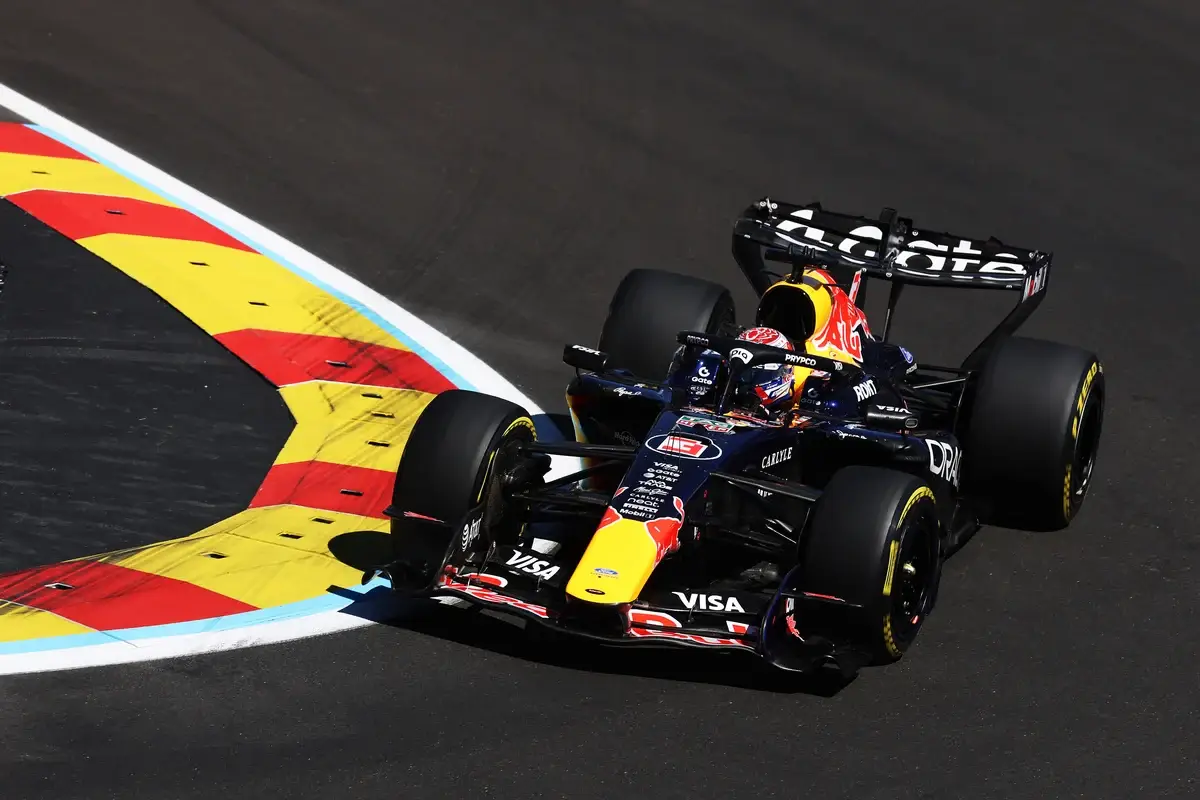
Ferrari has not named a part. “At this stage, we don’t yet know the exact cause of the brake system issue that forced him to retire,” Vasseur said. “But we will investigate it thoroughly.”
That is a more honest answer than teams usually give on a Sunday evening, and it is also the least comfortable one. A failure you can name is a failure you can fix. A failure you cannot name yet is a failure that might still be in the other car.
The Madring gave that risk a sharper edge. Almost every corner at the new Madrid circuit is lined with wall, so a car that will not stop has nowhere to run out of trouble. Pulling Hamilton in was the only sensible call available, and Vasseur said as much.
Eighty per cent of this car’s development is already 2027 work
The retirement landed in the middle of a question Ferrari keeps being asked: whether to give up on the SF-26 and turn everything towards next year. Vasseur’s answer is that the choice does not exist in the form people imagine.
“The development that we do now, 80 per cent will be carried over,” he said. If that figure holds, Ferrari is not running two projects in sequence. It is running one, and the 2026 car is the test bed for it.
The room to keep pushing is not unlimited. Development is constrained by the cost cap and the aerodynamic testing restrictions, and on the engine side Ferrari has already used both of the ADUO upgrades it was allowed. What is left is aerodynamic and mechanical work, and the argument that it is not wasted.
The gap is 101 points and the streak that held it together is gone
Hamilton leaves Madrid 101 points behind championship leader Kimi Antonelli, and Ferrari is 145 points behind Mercedes in the constructors’ standings after Charles Leclerc could only take fourth.
The more telling loss is the one that does not appear in the table. Hamilton had finished in the top ten at all thirteen rounds before Madrid, the longest points-scoring run of anyone this season. He has not been the fastest driver of 2026, but he had been the most consistently present, and that was the entire argument for staying in the conversation. One hydraulic problem ended it in seven laps.
Our concern: Baku is a bad place to be wrong about a brake system
Ferrari will strip the system in Maranello this week and will probably find something specific, and that is the likely and unremarkable outcome. Our concern is the other one.
Baku’s run to Turn 1 is over two kilometres long and ends in a ninety degree left with a wall on the outside. It is one of the heaviest braking events of the season, and on lap one it arrives with a full fuel load and the whole field around it. A team that has not found the cause by Thursday has to choose between running the same design and changing something it cannot yet justify. Neither is a comfortable place to be, and the honest position is that Ferrari does not get to be sure yet.
Baku, on a Saturday, in eight days
The Azerbaijan Grand Prix runs from 24 to 26 September, with practice on Thursday, qualifying on Friday and the race on Saturday, an unusual calendar shape that gives Ferrari one day less than normal between the last session and the start.
Hamilton’s own read on the weekend was that the car was not the problem. “We’ve had a pretty decent car, a good car this weekend and I think we will continue to try and improve it and I think we have better results coming in the future,” he said. Our report on the race itself is here, and the full table is on the Formula 1 standings page.