Vasseur names Ferrari’s real problem, and it is not deployment
Fred Vasseur admits a raw engine deficit is Ferrari's core problem, as Leclerc's Parabolica crash at Monza draws fresh scrutiny of his racecraft.


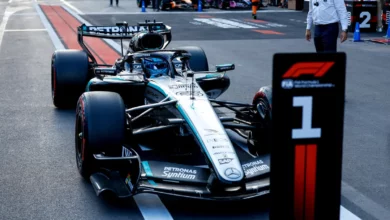
Ferrari brought its second and final power unit upgrade of the season to Monza, and left its home race further from Mercedes than when it arrived. Fred Vasseur did not hide behind the usual language about deployment maps and energy management afterwards. “In the end, we are missing pure power,” the team principal said. It is the most direct statement out of Maranello all year about where the gap actually lives.
In this article
Vasseur rules out deployment and points at raw horsepower
The convenient explanation for Ferrari’s straight-line problem this year has been deployment: the 2026 regulations put roughly half the power output through the electrical side, and getting that release right along a long straight is a genuine science. Vasseur turned that explanation around at Monza.
“When you have a lack of pure power, then you start to play with deployment, to try to compensate in the straight line,” he said. In other words, the deployment gymnastics are the symptom, not the cause. Teams only start juggling energy release when the combustion side is not delivering.
He also explained why Monza made it look worse than Zandvoort had a fortnight earlier. “If you are missing X in Zandvoort, you are two or three tenths off the pace. If you are missing a bit less than X in Monza, the delta with the Merc is two times bigger,” Vasseur said. Less deficit, more lap time lost. That is what a power-sensitive circuit does to a car that is short on horsepower.
Both ADUO upgrades spent, and 5.6 km/h still missing
The Monza engine was ADUO 2, and there is no ADUO 3 this season. ADUO stands for Additional Development and Upgrade Opportunities, the catch-up mechanism the FIA introduced with the 2026 rules. The governing body measures an ICE performance index from torque, engine speed and MGU-K output, then hands extra development room to anyone who falls behind the benchmark.
The ruling on 26 August set the field. Red Bull Powertrains was rated the benchmark and received nothing. Mercedes, sitting between two and four per cent back, was granted one upgrade in 2026 and one in 2027. Ferrari, Audi and Honda all fell more than four per cent behind and were granted two in each season. Ferrari has now used both of its 2026 allocation.
The result at Monza was measurable rather than theoretical. Ferrari was 5.6 km/h down on Mercedes through the speed traps in qualifying, with Charles Leclerc fourth and Lewis Hamilton fifth on the grid. Vasseur was careful not to pretend the upgrade had failed. “We were not expecting to recover with ADUO 1 or ADUO 2. We are doing small steps,” he said.
He also pushed back on the idea that an engine can be fixed the way a floor can. “The process of the engine is mega long because the lead time of the parts is long and the cost cap is not easy,” he said. A chassis update can be signed off in days. A power unit part cannot.
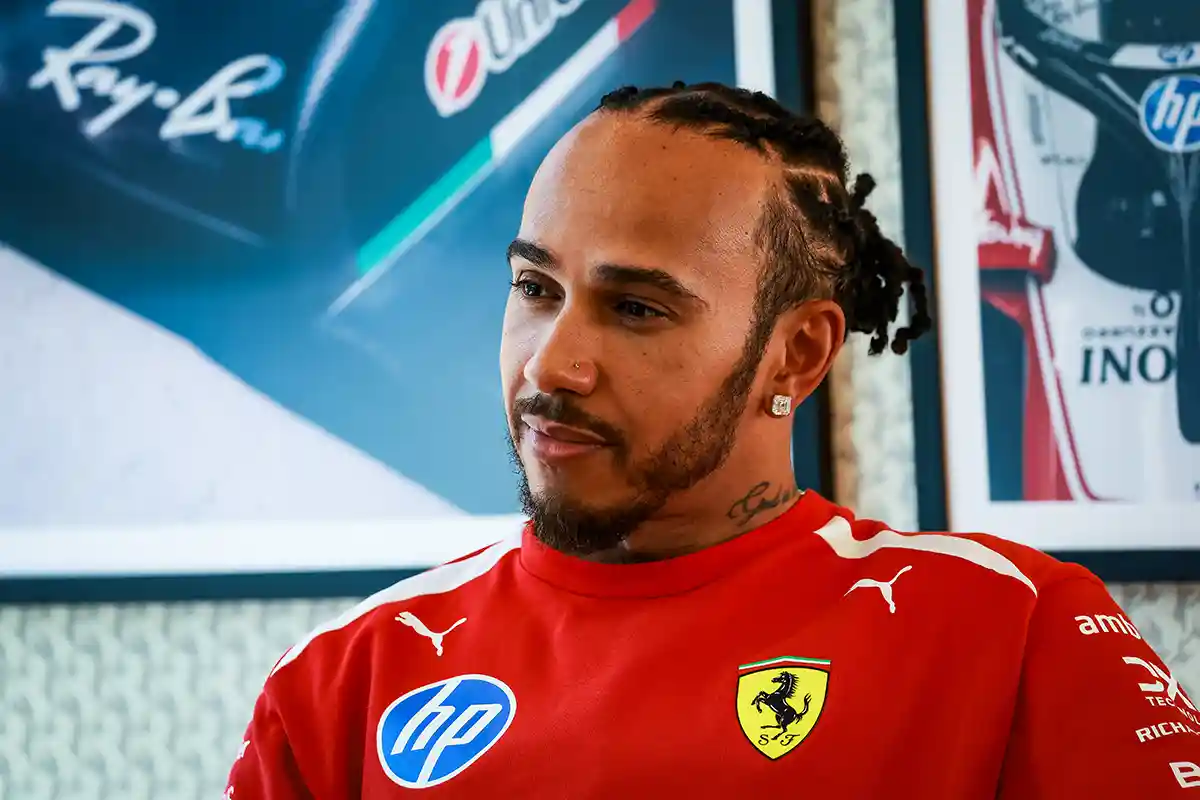
Hamilton says Ferrari is racing without rules of engagement
The engine is the technical problem. The bigger problem for Vasseur may be what happened between his two drivers on the opening lap.
Hamilton went around the outside of Leclerc at the Variante del Rettifilo. Leclerc shut the door, Hamilton ended up in the gravel and dropped from fourth to tenth. He recovered to sixth. Sky’s pundits could not agree on it, with Nico Rosberg calling it “100 per cent Charles’ fault” on the basis that “Lewis was ahead going in, so Charles has to leave room and he didn’t”, while Martin Brundle read the same footage the opposite way.
Hamilton’s own verdict was aimed inward rather than at Leclerc. “When I was at Mercedes, we had written rules of engagement,” he said. “Here, there are no rules. We need to address that.” Asked whether team orders were the answer, he was blunt: “We are too far past that already. It’s too late for that now.”
Leclerc did not dispute that it had gone beyond the acceptable. “Here, it’s true though that we went too far,” he said. “I think Lewis in Turn 1, then Turn 2, I tried to do the tightest corner possible, but that was just not enough.”
Vasseur’s answer was to reach for last season’s McLaren. “If McLaren put everything on Piastri, Max Verstappen would have been champion,” he said, arguing that clamping down early costs a team more than it saves. That is a defensible position when both drivers are in the fight. Ferrari’s drivers are third and fifth, 76 and 112 points off Kimi Antonelli. The comparison does not really hold.
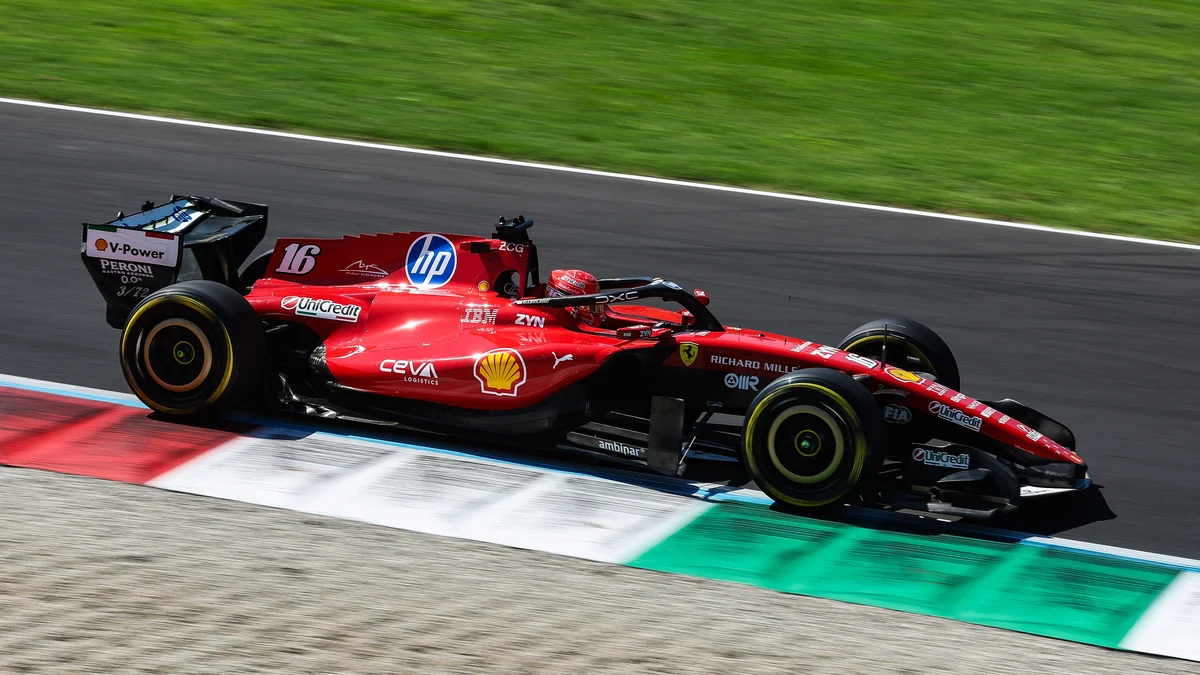
Leclerc’s weekend ended in the Parabolica barriers
Leclerc’s race lasted two laps. Fighting Oscar Piastri, he lost the rear on the exit of the Parabolica and hit the barriers hard enough to red-flag the race, taking a 60G impact and briefly losing vision in his right eye. He was sent for additional medical checks in the days that followed and has since been cleared to race in Madrid.
The telemetry suggests the moment was building before the snap itself, which shifts the conversation away from a simple mistake and towards how the SF-26 behaves on worn softs when a driver is asking everything of it. Leclerc has not tried to shift the blame. He called it his own error.
The 2027 engine is now the whole plan
With ten rounds left and the drivers’ title mathematically alive but practically gone, Ferrari’s season has become a development exercise. Vasseur said so himself. “Now we will have a new engine next year. For sure, the target is to catch up as soon as possible, but I was not expecting that in two months we will recover the delta with Mercedes.”
Ferrari still has two more ADUO upgrades available for 2027, and a genuinely new power unit to build them around. That is the realistic horizon. What Vasseur has to manage between now and then is a team whose engine cannot answer back and two drivers who have just shown they will not yield to each other.
Madrid, a circuit nobody has raced on and where the paddock is bracing for accidents, is not the gentle reset Maranello needed.