Antonelli leads final practice at Sepang, but the soft tyre lasts a single lap
Verstappen is 0.278s back in second, Hadjar third but facing a five-place grid drop, and every team must decide how many new soft sets to spend chasing pole

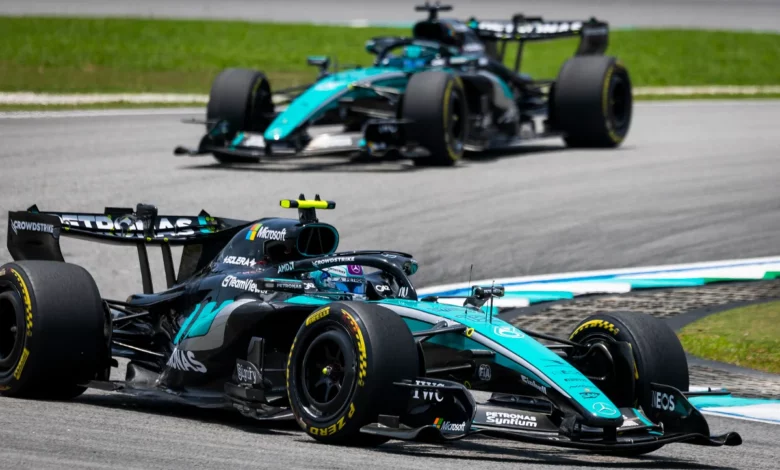
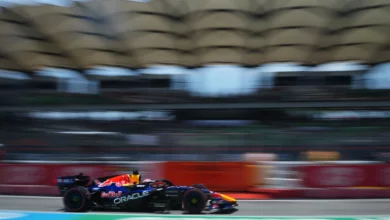
Kimi Antonelli set the fastest time in the third and final practice session for the Bahrain Grand Prix in Malaysia, a 1m 36.302s at Sepang. Max Verstappen was second, 0.278s slower, with his Red Bull team mate Isack Hadjar third at 0.558s.
The order is only half the story. The soft tyre gives its best on its first flying lap and fades straight after, and that turns this afternoon’s qualifying into a question of arithmetic as much as raw speed.
Mercedes bounce back from a difficult Friday
It was the first time this weekend that Antonelli topped a session. On Friday, Mercedes had what the team itself called one of its “toughest Fridays” of the season: Verstappen led FP1, Charles Leclerc topped FP2 for Ferrari, and Antonelli and George Russell finished only seventh and eighth in the second session, both without a clean lap on the softs. That came on the weekend Mercedes brought a significant upgrade package to Sepang.
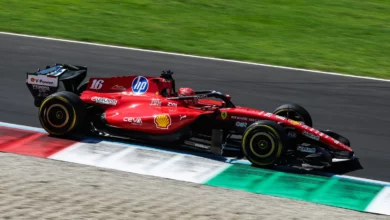
On Saturday the picture looked different. Russell was fourth, 0.610s behind his team mate, ahead of the Ferraris of Leclerc and Lewis Hamilton. Lando Norris and Oscar Piastri were seventh and eighth for McLaren, with Franco Colapinto (Alpine) and Arvid Lindblad (Racing Bulls) completing the top ten.
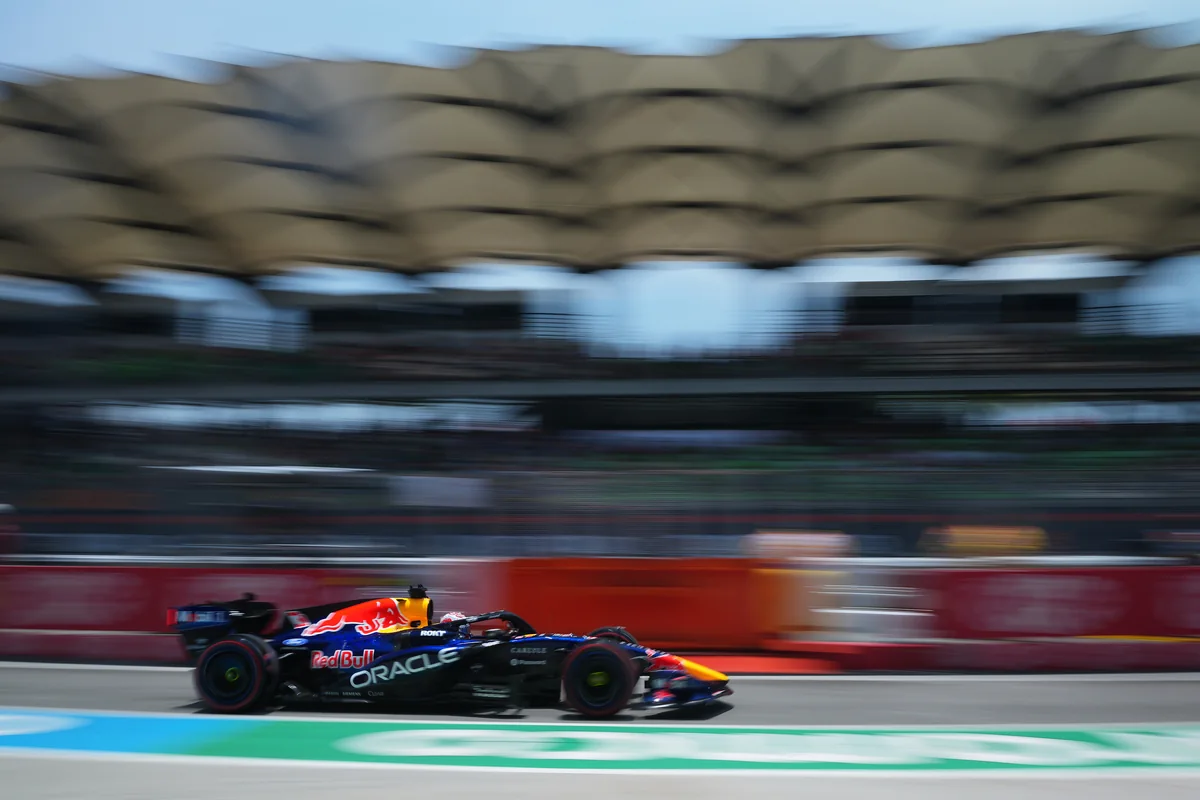
The session was briefly stopped with a red flag just before half distance, for debris from Ollie Bearman’s Haas. Verstappen set the fastest first sector on his early run but lost time in traffic, and Hamilton was seen waving a hand after getting stuck behind Lindblad.
Leclerc called the degradation “insane”
Tyre wear has dominated the weekend since the first session. Leclerc described the degradation as “insane” over the radio in FP1, and after topping FP2 he was clear about where the weekend will be decided: “The degradation is going to be the main talking point of the weekend,” he said.
Ferrari team principal Fred Vasseur agreed: “Over the last five or six weekends [this is] the first one we are more focused on degradation than something else. Conditions are a bit extreme and, for everybody, it’s almost a new track.”
That last point matters. Formula 1 last raced at Sepang in 2017, and only ten drivers on the current grid took part then. Nobody has run this generation of cars here before, and the combination of heat, humidity, a track that was dirty and slippery on Friday, and long, fast corners that load a tyre for seconds at a time catches teams out. Rain is also possible.
RNT’s analysis of the practice lap times shows a clear pattern: the softest compound was at its best on the first push lap of a run. A second attempt on the same set was already slower, and the tyre kept losing performance from there. The drop was clearest for Russell, Verstappen and Leclerc, and several other drivers showed the same trend.
The track surface appears to be a large part of the problem. The asphalt is crumbling, and worn material from it lies on the circuit as loose, gravel-like debris. On a first lap the fresh tyre still has the grip to cope. By the second lap it has picked up that debris, and in this heat it sticks to the hot rubber and costs grip. That fits with what Leclerc said on Friday about a track that was “quite dirty actually and very slippery”.
RNT has a full explainer on tyre degradation.
One set, one lap, one chance
For qualifying that has two consequences. First, a driver gets one real chance per set: there is no point doing a cool-down lap and trying again on the same tyres. Second, the out-lap becomes critical. Bring the tyre in too cold and the first sector is lost; push too hard on the way round and the peak is gone before the timed lap starts.
Any mistake on that single lap, a moment of oversteer in the fast corners, a lock-up into a hairpin, or traffic like Verstappen and Hamilton met in FP3, costs the whole set.
Every new set spent today is a set missing tomorrow
Each driver has a fixed allocation of tyres for the weekend, and some of the softs have already been used in practice. Every fresh set used in qualifying is a set that is no longer available for the race.
Spend a new set in Q1 to be sure of getting through, and there may be only one fresh set left for Q3, which means one attempt at pole. Try to survive Q1 or Q2 on used tyres to save a set, and the risk of an early exit rises, because a used soft here is clearly slower than a new one. The bigger teams will want two fresh sets for Q3. For the midfield, where a tenth decides between progressing and going out, the safer choice is new tyres early.
There is a twist. If the soft fades this quickly over a single lap, it may barely feature in the race, with teams leaning on the harder compounds over a long stint. Then saving softs for Sunday is worth less than usual.
Hadjar’s third place will not be his grid slot
For three drivers, the tyre calculation is different. Hadjar, on the podium in Baku last time out, takes a seventh internal combustion engine of the season and drops five places on the grid. Lindblad has exceeded several power unit elements and starts from the back regardless of where he qualifies. Colapinto takes a fifth engine, adding ten places to the five-place drop he carried over from his collision in Azerbaijan.
Our arithmetic
Pole at Sepang will go to the driver who nails one lap, and that favours whoever reaches Q3 with two fresh sets of softs. Lindblad has nothing to gain from spending new tyres today, so expect Racing Bulls to save them for Sunday. Hadjar’s case is closer: every place still counts, but a five-place drop makes it tempting to keep sets back for the race. If Red Bull does that, Verstappen carries the team’s pole hopes alone against two Mercedes.
Antonelli arrives at Sepang leading the championship with 302 points, 66 ahead of Russell. With the out-lap likely to decide as much as the lap itself, 0.278s is no margin at all.
Does Antonelli turn his FP3 pace into pole, or does Verstappen find the three tenths when it counts? Tell us in the comments.
Qualifying starts at 16:00 local time
Qualifying begins at 16:00 in Malaysia (08:00 UTC), and the race starts on Sunday at 15:00 local time. Watch how many runs the front-runners do in Q1 and Q2: a single run means a driver is saving tyres for Q3, an early second run on new softs means trouble or caution. In Q3, watch the out-laps. The gaps between cars will show how much the teams fear losing the tyre’s single peak.
Catch up on Friday’s FP2 results and our Sepang weekend guide, and follow qualifying with us in the RNT live blog. Driver profiles: Kimi Antonelli, Max Verstappen, Isack Hadjar.