
GT3, GT2 and GT4 explained: how the three GT classes differ

GT3, GT2 and GT4 are three classes of GT racing car. All three start from road-going sports cars and all three run under rules from SRO Motorsports Group, but they are not a simple ranking from fast to slow. GT3 is the quickest over a lap, GT2 has the most power, and GT4 stays closest to the car you can buy in a showroom. This guide explains how they differ, who drives them and where each one races.
What is a GT3 car?
GT3 is the most widely raced GT category in the world. A GT3 car is based on a road car, but it gets far more advanced aerodynamics, much more downforce, more sophisticated suspension and electronics, and more performance than the other two classes. The result is the fastest lap times of the three.
The class was designed for customer racing: manufacturers sell the cars to private teams, and professional and amateur drivers race together under one global rulebook. That makes GT3 the backbone of international GT racing. It is the car of GT World Challenge Europe, and GT3 cars also race in the DTM, in the SP9 class of the NLS at the Nürburgring, and in the LMGT3 class of the FIA World Endurance Championship and the 24 Hours of Le Mans.
What is a GT4 car?
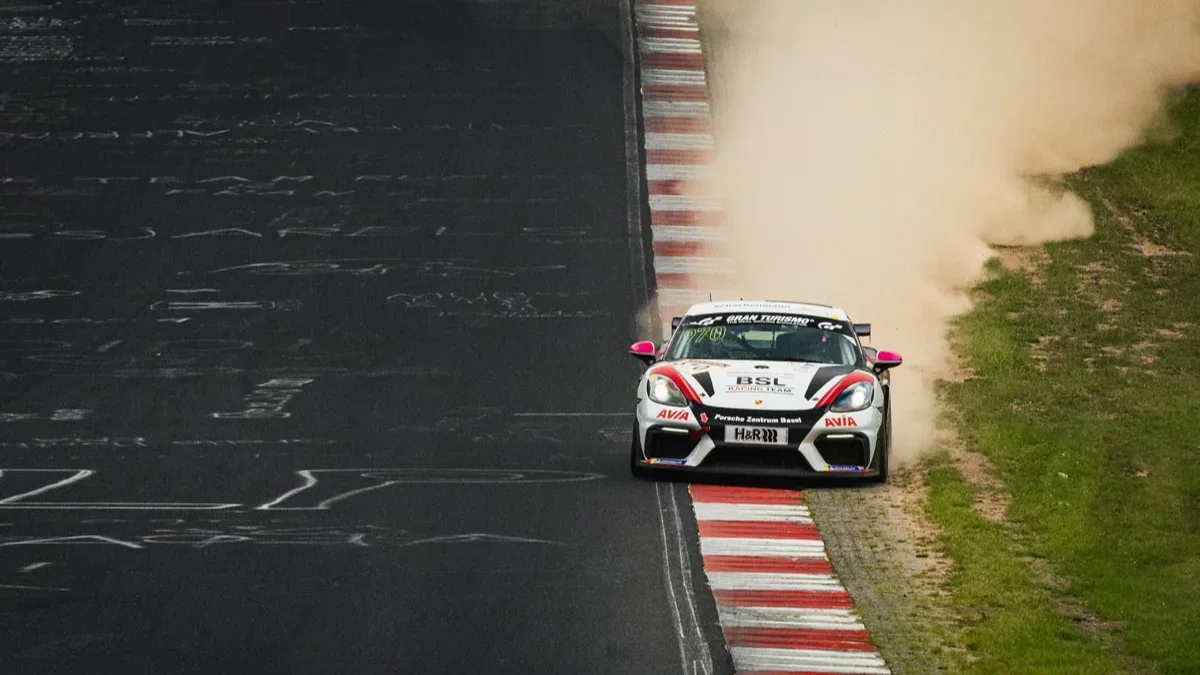
A GT4 car stays close to its road-going version. It has fewer modifications, limited aerodynamics, less power and more production-based parts, which keeps running costs well below GT3. The class is aimed at amateur drivers, young talent and teams on a tighter budget, and because the cars are so evenly matched the racing is often very close.
The best-known championship is the GT4 European Series, which races on the GT World Challenge Europe weekend in three classes: Silver, Pro-Am and Am. Its 2026 grid included the Toyota GR Supra, Audi R8 LMS, Porsche 718 Cayman GT4 RS Clubsport, BMW M4, Mercedes-AMG GT4, Ford Mustang, McLaren Artura, Aston Martin Vantage, Lotus Emira and Ginetta G56, all in GT4 specification. At the Nürburgring, GT4 cars race in the NLS as class SP10.
What is GT2?
Despite the name, GT2 does not sit above GT3. In SRO’s ladder it sits between GT4 and GT3. SRO built the class to put amateur drivers back at the centre of GT racing: a GT2 car has more outright power than a GT3 car, but it relies much less on aerodynamics for its lap time, which makes it more manageable for a gentleman driver.
The GT2 European Series also runs alongside GT World Challenge Europe. Each round has two 50-minute races with a mandatory pit stop, and the classes are Silver, Pro-Am (an amateur sharing with a professional) and Masters, for Bronze-rated drivers. Audi, KTM, Maserati, Mercedes-AMG and Lamborghini are on the grid, with Ginetta’s G56 GT2 set to join. In the NLS, GT2 cars race as class SP11.

Which is fastest: GT3, GT2 or GT4?
Over a full lap, GT3. Its aerodynamics, braking and cornering speed usually make it the fastest of the three. A GT2 car is often quicker on the straights thanks to its extra power and higher top speed, but it gives that time back in the corners, where it has less grip. GT4 is the slowest of the three. The exact gaps depend on the circuit and the conditions.
How do the three classes compare?
| GT3 | GT2 | GT4 | |
|---|---|---|---|
| Place in the SRO ladder | Top | Between GT4 and GT3 | Entry level |
| Power | High | Highest of the three | Lowest of the three |
| Downforce | Highest | Much less than GT3 | Limited |
| Fastest where | Over a lap and in corners | On the straights | Slowest overall |
| Close to the road car | Least | In between | Most |
| Who drives | Professionals and amateurs together | Mainly amateurs, often with a professional | Amateurs, young talent, budget teams |
| Main series | GT World Challenge, DTM, WEC LMGT3, NLS SP9 | GT2 European Series, NLS SP11 | GT4 European Series, NLS SP10 |
Are GT3, GT2 and GT4 cars balanced with BoP?
Yes, but only within each class. Balance of Performance adjusts weight, power and other settings so that, for example, a Porsche, a BMW and a Mercedes-AMG can race on equal terms in the same class. It never makes a GT4 car as fast as a GT3 car. Our guides explain how Balance of Performance works, and how it is applied in GT World Challenge and in the NLS.
Is this the same as Pro, Gold, Silver and Bronze?
No. GT3, GT2 and GT4 are classes of car. Pro, Gold, Silver and Bronze are classes of driver crew, based on FIA driver ratings: in GT World Challenge Europe every car is a GT3, and the crew’s ratings decide which class it races in. See GT World Challenge classes explained.
Can one manufacturer build a car for all three classes?
Yes. Mercedes-AMG and Audi both have cars in GT3, GT2 and GT4, and Porsche has raced in all three. Each version is a separate car with its own approval, a process our guide to homologation explains.
Where can I see all three on one weekend?
At GT World Challenge Europe. The GT2 European Series and the GT4 European Series both race on its support programme, so one weekend can show all three classes on the same track. The 2026 season finale at Portimão was one example: the GT3 field on the entry list, and the GT2 title fight with the Iron Dames. At the Nürburgring, the NLS puts GT3, GT2 and GT4 cars in one race, as its class system shows.
Sources: SRO Motorsports Group, “Chat GT3: What Are the Differences Between GT3, GT2, and GT4 Cars?” (gt-world-challenge-america.com, July 2026); GT2 European Series (gt2europeanseries.com and sro-motorsports.com); GT4 European Series 2026 entry list, Paul Ricard (gt4europeanseries.com).