Alpine’s quantum partnership is still a proof of concept, and the CFD cap is why it matters


BWT Alpine has extended its partnership with the quantum technology company SEALSQ, and the most useful sentence in the announcement is not the one about a world first. It is the one where a co-founder of the firm doing the actual computing explains what quantum hardware still cannot do.
In this article
- It started in November 2025 as a security arrangement
- The regulation nobody names is the reason this is interesting
- A world first that has not produced a result yet
- The most honest voice in the release is the supplier
- Our question: who is this announcement written for?
- The thing to watch is whether a proof of concept appears
It started in November 2025 as a security arrangement
Alpine and SEALSQ, a NASDAQ-listed company that builds post-quantum cryptography into semiconductors, announced a quantum security partnership in November 2025. The point then was data protection: encryption that is meant to survive the arrival of quantum computers capable of breaking what protects Formula 1 teams today.
The new announcement adds computation to that. Through ColibriTD, a Paris company in SEALSQ’s investment portfolio, Alpine wants to run hybrid quantum-classical simulation alongside the computing it already has at Enstone. Engineers and executives from the three parties met at the factory in July to agree a roadmap and pick the areas worth evaluating first.
The regulation nobody names is the reason this is interesting
Formula 1 does not let teams simulate as much as they want. Wind tunnel runs and computational fluid dynamics are both capped, and the allocation slides according to where a team finished the previous season, so the teams at the front get less of it than the teams at the back. It is one of the few genuine equalisers in the sport.
That cap is a limit on quantity, not on cleverness. A team that gets more out of each permitted simulation gains something its rivals cannot simply buy their way past, and in the first year of a new technical formula, when nobody has a settled understanding of the car, that is worth real lap time.
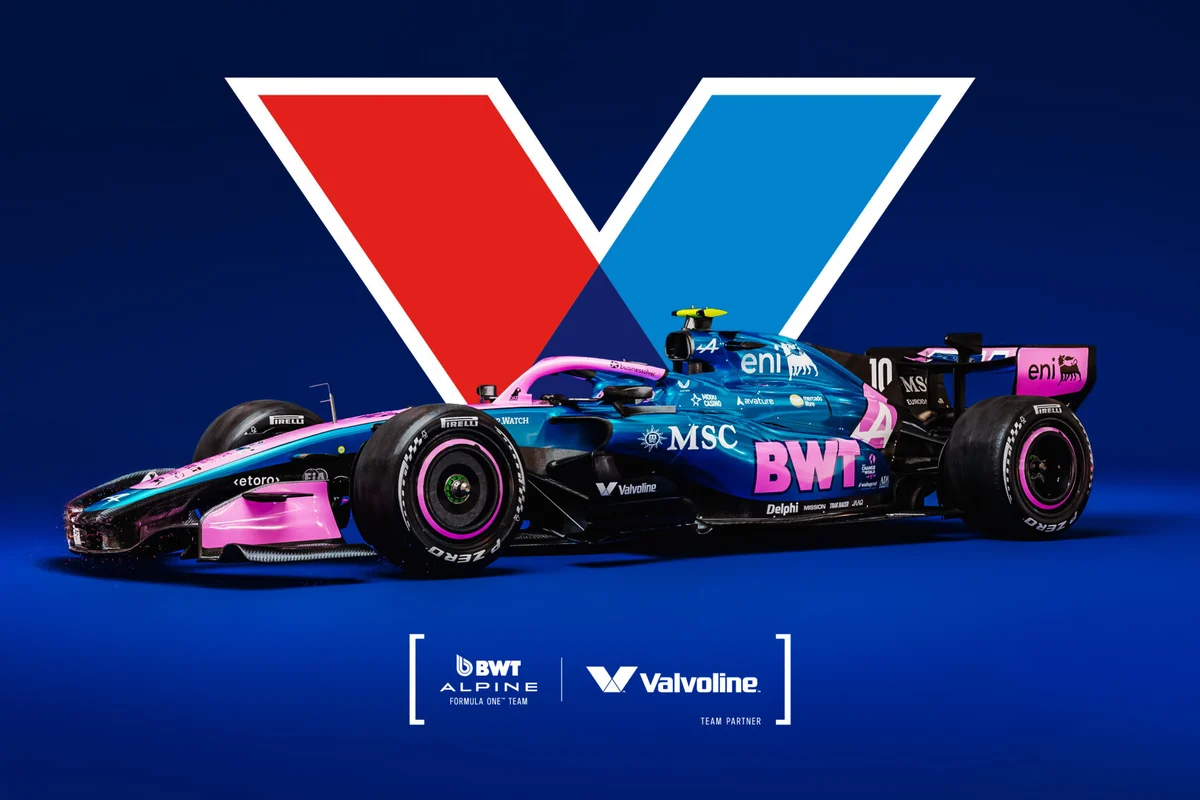
This is what Alpine is actually shopping for. David Sanchez, the team’s executive technical director, put it in careful terms: “We are in constant pursuit of better understanding in every area and are always looking at how emerging technologies can help us extract insight from data and simulations to underpin engineering decisions.”
A world first that has not produced a result yet
The release calls the project “a world first: the structured application of quantum-accelerated simulation to solve fundamental physics problems faster and more efficiently than classical methods alone”. Read the rest and that claim gets smaller. The July meeting was held to “establish the project’s initial roadmap and identify priority areas for evaluation with the goal to develop a proof of concept”.
So there is no deployment, no measured gain, and no result. There is an agreement to try, and a list of problems worth trying it on. That is a normal and reasonable place for a research partnership to be. It is not a world first in any sense a rival engineer would recognise, at least not yet.
The most honest voice in the release is the supplier
Laurent Guiraud, co-founder of ColibriTD, is the one person quoted who describes the limits rather than the promise. “Today’s quantum hardware is limited in qubit count, coherence time and connectivity, much as the team’s simulation budget is limited by regulation,” he said, before describing his company’s solver as “a near-term, hardware-agnostic approach that extracts computational value from current and emerging quantum processors without waiting for fault-tolerant quantum computing, deployed alongside classical HPC rather than in place of it”.
That is the accurate version. Nothing here replaces the conventional computing Alpine runs. It sits next to it and tries to get a little more out of the same regulated allowance, using machines that are not yet very good.
Our question: who is this announcement written for?
The document tells you itself. It ends with a forward-looking statements section, a reference to filings with the SEC and a note that actual results may differ materially. That is investor language, not engineering language, and SEALSQ chief executive Carlos Moreira frames the work as “a perfect application of the Quantum Vertical Sovereign Stack SEALSQ is building through our 200 million dollar Quantum Fund”.
None of that makes the technical work fake. It does mean the announcement is doing two jobs at once, and only one of them is about making an Alpine quicker. When a small listed technology company partners with a Formula 1 team, the visibility is usually a large part of what is being bought, and it is worth saying so plainly rather than reprinting the phrase “world first” and moving on.
The thing to watch is whether a proof of concept appears
The honest test of this partnership is simple. Somewhere in the next year either a proof of concept exists and Alpine can say what it measured, or the next announcement is another agreement to explore. The first outcome would make this a genuinely interesting story about the CFD cap. The second would tell you what it always was.
Alpine’s season has offered better news elsewhere. Pierre Gasly took the first pole position of his Formula 1 career at Monza this month, the team’s first since it stopped being Renault, before Antonelli won the race from nineteenth.