Silverstone’s fast corners expose F1’s 2026 energy problem
Drivers warn the British GP will be "not fun to drive" as F1's iconic corners become battery-saving zones under the 2026 rules.


Drivers arrive at Silverstone this week with a shared worry: the corners that make the British GP special may be the ones the 2026 cars handle worst. The new power units lean heavily on battery energy, and Silverstone’s fast, flowing layout offers very little room to put it back.
Why Silverstone is a uniquely awkward circuit for the new rules
Silverstone is one of the fastest tracks on the calendar and a favourite of many drivers. However, the new 2026 power units are highly dependent on their batteries for power, and Silverstone’s many fast corners offer few opportunities to charge them.
The 2026 power units need significant braking zones for drivers to recharge their battery. But Silverstone, one of the circuits with the highest on-throttle percentage of the entire calendar, has rather few of those, and plenty of high-speed corners that will have to be used as “charging stations” for the long straights that follow, as Fernando Alonso described it.
The new generation of F1 cars are energy starved, and the layout of the track means there is a long run from the exit of Brooklands down to Stowe that offers little opportunity to recover power. This means that cars will be out of battery energy long before the Hangar Straight, with simulator runs suggesting car speeds fall away dramatically through the Becketts complex.
You can read more about the technical background in our dedicated piece on 2026 F1 cars’ Silverstone power issues.
Alonso calls Becketts a “charging station”
The high-speed layout of the British GP venue, which features several traditionally flat-out corners leading onto long straights, is set to expose the limitations of the new cars more than recent races, despite several fixes introduced in Miami. Asked how he expects the legendary Maggotts, Becketts and Chapel to feel, two-time world champion Fernando Alonso replied: “A charging station.”
Alonso warned: “I think the next two races are going to be a different experience than what we’ve been used to driving in Silverstone and Spa. This year is going to be very different and not fun to drive the cars. Looking at the simulator laps and things like that it’s going to be quite sad, I think, for the drivers, but also for the spectators.”
Alonso also explained that the problem is even worse in corners than on straights. “The problem when you de-rate on the corners is also that your drag level is higher, and you have the rolling resistance from the tyres turning the wheels,” he said. “So you lose the speed by the pure drag of the car, but you lose extra speed because you are turning the car, so it doubles the effect a little bit on the corner.”
Hamilton and Verstappen add their voices
Both Lewis Hamilton and Max Verstappen have said the energy rules will shape how their weekend goes.
Lewis Hamilton was equally alarmed. “I think this is going to be the most unprecedented weekend in terms of the power deployment,” he said. “All us drivers have been talking in the drivers’ chat about just how poor the power is going to be through this track. We run out of battery power, there’s only a few corners to charge the engine, so the [MGU-]K will be switched off for a large portion of the lap.”
Max Verstappen raised the issue after the Austrian Grand Prix, revealing his simulator running for Silverstone had left him stunned by how different the circuit felt. “Silverstone, I love the track, but I did a few laps on the simulator and I just started laughing,” Verstappen said. “It felt like a different track, to be honest.”
Verstappen added: “Because of how we generate our power nowadays, this track layout, unfortunately, it’s just not suited for it because of all the continuous long straights and fast corners, you don’t really dab the brake or whatever, so you can’t really recharge enough. When you rely only on the ICE, you don’t have enough power. So, in a lot of places around the lap, you basically just slow down a lot.”
How the FIA softened the energy limits
The FIA’s response has been cautious.
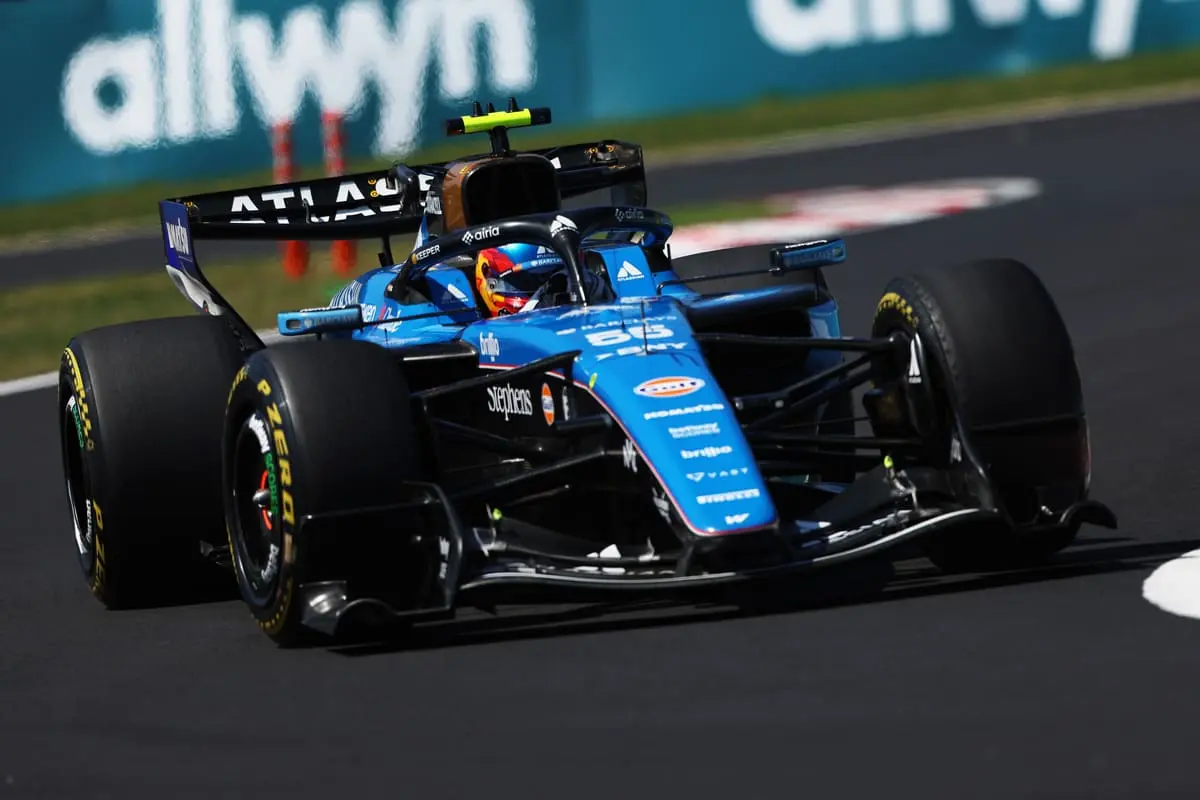
In a bid to avoid the worst side-effects of these regulations, the FIA has taken a conservative route with the maximum energy deployment limits for this weekend. The deployment limit has been set to 8MJ for the race and 6.5MJ for qualifying, which is 0.5MJ lower than Barcelona.
Sergio Perez said Silverstone would likely be the biggest examination yet of the 2026 regulations, even after changes aimed at easing some of the earlier energy management problems. “I think it’s probably the best test we face so far, since Miami,” he said. “The other circuits were not so critical with energy. I think this one is the biggest tests we are facing with these new regulations so far.”
Also worth checking out is our article on why battery fears could shake the British Sprint, as this is a Sprint weekend too, which adds another layer of complexity to the energy puzzle.
Is there any good news for fans?
Because of how energy-poor the cars are on this circuit, there is a very real possibility drivers will be enticed to deploy energy on one straight only to be a sitting duck on the next and be re-passed, a phenomenon dubbed “yo-yo racing” this year.
George Russell offered a more optimistic view. “I think Silverstone will be great,” he said. “With these regs, we knew there were going to be some tracks that were more difficult than others for 22 drivers to experience. 600,000 fans here, I don’t think probably care so much about energy management. And on the flip side, the tracks that are most challenging for the energy, such as Melbourne and China, they have so far produced better racing than we’ve seen in the past at those tracks. There’s no doubt that tracks that are energy starved, their racing will be better, and it will be a bit more chaotic.”
None of this is settled yet. Fans, drivers and engineers will all be watching closely. For the full official schedule and weekend details, check the Formula 1 official British GP page. And for a deeper look at the circuit itself, our Silverstone circuit guide has everything you need to understand every corner that is now part of this debate.
The RNT Weekly newsletter
Race weekend times, results and our best stories in your inbox. Free, and you can unsubscribe at any time.