Why the Mercedes deployment problem Belgian GP hurts
George Russell's race-ending DNF at Spa was bigger than one driver's bad luck — it hit every Mercedes-powered car on the grid.


The Mercedes deployment problem Belgian GP was not just George Russell’s bad luck. It hit every single Mercedes-powered car at Spa-Francorchamps on the opening lap, and it cost Russell dearly in the 2026 title fight.
The Mercedes deployment problem Belgian GP: what happened?
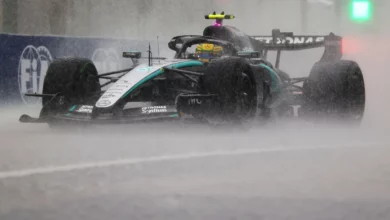
Russell started third on the grid and made a clean getaway. But as he exited La Source at the start, something went badly wrong. “The battery decided not to recharge at Turn 1,” he said. “The battery didn’t charge and I exited the first corner 35 percent down. And because it didn’t charge, I also had a boost problem.”
While Russell paid the biggest price, due to a lack of deployment up the Kemmel Straight that triggered his tangle with Lewis Hamilton at Les Combes, his team explained how every Mercedes-engined car suffered at Spa-Francorchamps. Mercedes team boss Toto Wolff confirmed: “All Mercedes engines had a lack of energy out of Turn 1, so it wasn’t only George. It affected him more than Kimi Antonelli, but also Kimi had that issue to a certain degree.”
Other than Russell, the biggest victim was Alpine’s Pierre Gasly, who saw cars simply drive away from him on the run down to Eau Rouge. “I had no power at the start, so it’s clearly not good stuff to have around Spa,” he said.
Russell calls the issue “dangerous”
Russell was furious. He said: “I had a boost problem; the turbo didn’t sort itself out, so no power, and I got to the top of Eau Rouge with 0% battery, and quite frankly, it was dangerous. I got swamped by three cars, and I shouldn’t have been in that position in the first place, and that is why I am most angry.”
He was not just angry in the media pen. In an expletive-filled message to Mercedes over the radio, Russell directed the blame at the car, saying it was “unacceptable” that he had suffered a dramatic loss of speed on the previous straight, dropping him from third to fifth behind Hamilton. “I’m out!” Russell exclaimed in the unbroadcast message. “What the f: happened with the SOC [state of charge] down the straight? I had no f: – battery down the straight!”
Wolff admitted: “We had an issue on all Mercedes engines that we lacked the power out on the straights. That bit him [Russell] badly and it goes one-hundred-percent on us.” He added that “the package just isn’t reliable enough yet. That’s something we need to fix because it’s costing us valuable points in the constructors’ championship.”
Why Antonelli escaped and Russell did not
So why did Kimi Antonelli Wolff revealed that the issue appeared to have been triggered by a combination of a power unit setting and some driving inputs from Russell himself.
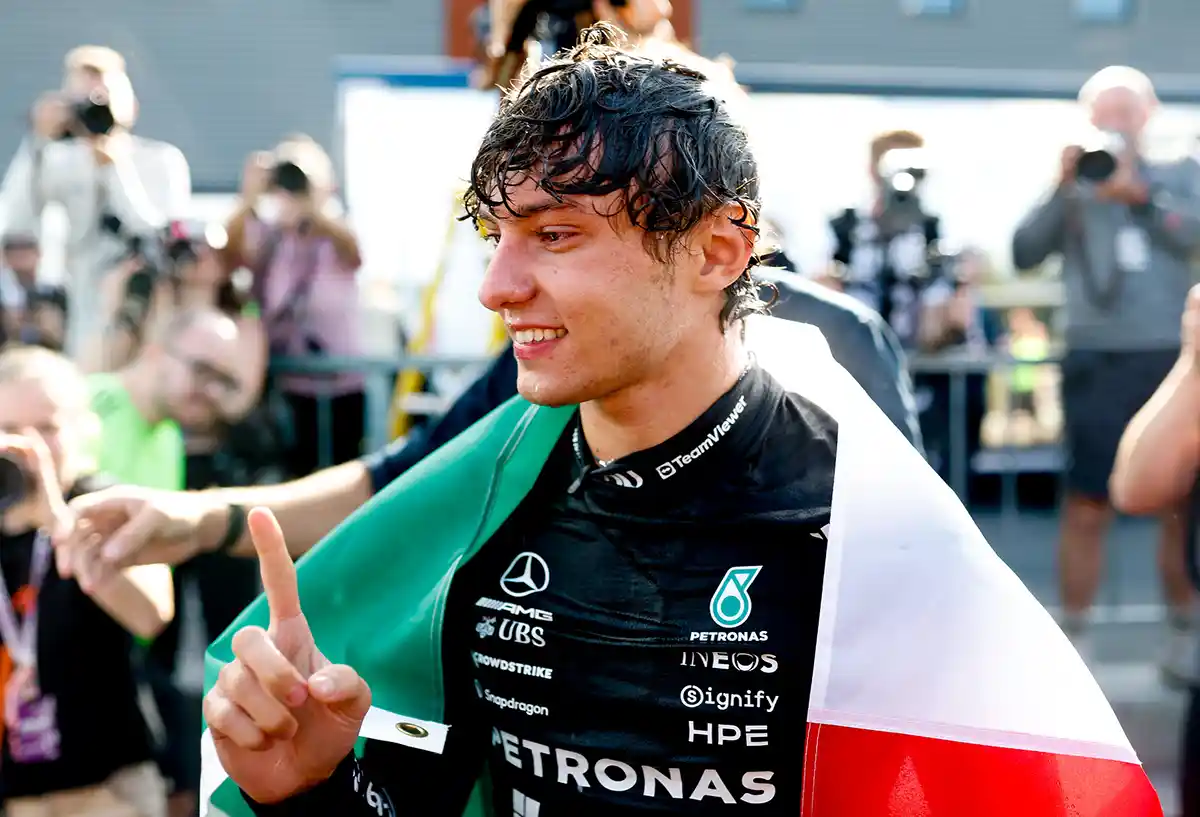
Wolff suggested Antonelli has an advantage with the new-generation power units for 2026. “I think this is probably an advantage that Kimi has, because it reset for everyone,” he said. “The components of energy harvesting and energy deployment plays a role. Even the way you go on the throttle can have consequences in terms of the energy delivery. And that’s another dimension that has been handed to the driving, some drivers may not like it.”
The system uses data from the driver’s own throttle and braking behaviour to make its energy calculations for later in the lap. If a driver’s inputs are inconsistent or not optimised for the system, the AI’s predictions become less accurate, and the driver pays the penalty in terms of available energy. Antonelli, sources say, is providing cleaner and better-calibrated inputs, which is why the same system works more efficiently on his side of the garage.
The self-learning system: driver input is the key
This is where the Mercedes deployment problem Belgian GP becomes more than just a reliability story. And that information ultimately comes from the driver.
A source with knowledge of the situation confirmed to RNT Motorsports that if a driver’s style unintentionally feeds the system poor input data, the AI makes calculations that work against that driver later in the lap. Russell may be giving the system suboptimal signals through his driving style, without even realising it. The quality of input determines the quality of the output. That is the real issue here. Russell, and any other affected drivers, will need to find a way to adapt their style so that the system receives the right data to work with. Drivers are no longer managing only tyre temperature, brake balance, fuel consumption and conventional engine modes. Their inputs can also influence the behaviour of an electrical system whose effects may not become apparent until much later in the lap.
This is a new dimension of driver skill in 2026. You can read more about how energy management became the defining challenge at Spa in our dedicated analysis.
What this means for the title race
The consequences of this Mercedes deployment problem Belgian GP are enormous. Russell’s retirement and Antonelli’s victory mean the Italian now holds a 50-point advantage over the Briton, with Hamilton moving ahead and into second place in the drivers’ standings.
Russell’s DNF on Sunday was his second following an engine failure in Canada, while Antonelli retired in Barcelona because of an engine failure and then dropped from a likely victory to out of the points at Silverstone because of a wheel-guard failure. The reliability story is biting both drivers, but only one of them keeps winning.
Russell admitted the repeated setbacks had changed how he processed another costly result. “I’m numb to the disappointment now. When it happens so often, you just get used to it.”
Russell now has a mountain to climb. Check out how the Antonelli-Russell gap grew at the Belgian GP for a full breakdown of the championship picture, and follow the latest standings on our Belgian GP race report page.
The RNT Weekly newsletter
Race weekend times, results and our best stories in your inbox. Free, and you can unsubscribe at any time.