IndyCar IR-28 new chassis 2028 changes everything
The Dallara IR-28 is lighter, faster, and built to break records, here is everything you need to know about IndyCar's biggest step in over a decade.


IndyCar has revealed the IR-28, the new chassis it will race from 2028. IndyCar has revealed the first images of the new Dallara IR-28 chassis, which the series will introduce in 2028. This is a huge moment. It is the biggest technical step the series has taken in well over a decade.
In this article
A clean-sheet car for 2028
The IR-28 will be the series’ first all-new chassis since the current DW12 debuted in 2012. That means IndyCar has been running essentially the same car for around 15 years. The cars have undergone various alterations since then, including the addition of the Aeroscreen in 2020. But nothing as fundamental as this.
Replacing the long-serving DW12 platform, the IR-28 features an aggressive visual overhaul, a purpose-built safety structure, significant weight reduction, and refined aerodynamics designed to improve close-quarters racing.
Claimed to be a new design from the ground up, the Dallara IR-28 is visually very similar to the IR-18 that has been used as IndyCar’s spec chassis since 2018. The IR-28 features a roomier cockpit, new front and rear wings, and an integrated aeroscreen that combine for a fresher and slightly more modern look.
As with the series’ current car, the new model will appear in two guises: one for road and street courses and another for oval speedways such as Indianapolis.
A lighter car that demands more from every driver
Weight is one of the biggest talking points around the new car. With the IR-28 chassis projected to weigh around 45 kilograms less than the current version, IndyCar expects its 2028 cars to offer a greater power-to-weight ratio. That is a massive difference. It will make the car much more demanding and far more rewarding to drive.
The lighter frame will significantly improve acceleration and braking performance, allowing drivers to follow closer and push harder in wheel-to-wheel battles.
Particularly in recent years since the addition of the heavy hybrid unit, overtaking has proven tougher on road and street courses. For the first time, aerodynamics will be purpose-built to optimise the wake from front to back of the 2028 car, with reduced outwash aimed at encouraging more overtaking.
Reaction across the paddock was overwhelmingly enthusiastic as drivers and team leadership got their first look at the future of the series. Four-time champion Alex Palou summed up the mood perfectly: “Seeing the car for the first time made me even more excited about where IndyCar is going.”
The engine package
The new chassis is just part of the story. IndyCar will also replace its current 2.2-litre V6 turbo engines with new 2.4-litre versions, with the upgraded power units predicted to produce up to 760bhp.
Chevrolet and Honda have committed to participate under the new engine formula, which will deliver increased torque, power and overall performance compared to the current generation of IndyCar engines.
The new hybrid unit will feature a battery-based Energy Storage System (ESS), supplied by BOLD Technology, which develops F1 battery systems. The IR-28’s ESS will deliver approximately 14 times the energy storage capacity of the hybrid in the DW12. That is a staggering upgrade. Drivers will have far more flexibility in how they use that extra power.
Built around a lightweight, shared damping architecture, the AXIS platform expands spring, damper and inerter tuning options without increasing costs. Its highly tunable, multimode design improves mechanical grip through suspension optimisation, reducing reliance on aerodynamic load while giving teams significant setup flexibility.
A platform for a more global series
This is not just about a new car. It is about what IndyCar wants to become. The series has been building momentum with exciting racing at circuits like Nashville Superspeedway, and drivers like Mick Schumacher are drawing new fans to the sport. The series hopes the IR-28 will help it reach a more international audience. We wrote about IndyCar’s global push recently, and this car is central to that vision.
Engineers also emphasised crash stability, saying the chassis is less likely to become airborne during incidents involving spins or nose-up contact. The design exceeds either IndyCar or FIA safety standards, depending on which requirement is more stringent.
IndyCar President J. Douglas Boles was clear about what the IR-28 means: “There is still plenty of work to do before 2028, but we are well on our way to showcasing a new era of IndyCar, which will include enhanced wheel-to-wheel competition, track records, standards in raceability and new benchmarks in safety.”
Testing has already begun
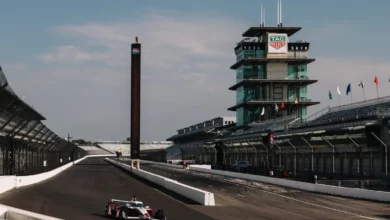
Renderings of the long-awaited car were released on Tuesday, with testing set to commence on 1 August. It will take place at the Indianapolis Motor Speedway road course in the hands of veteran drivers Alexander Rossi and Alex Palou.
Just prior to May’s running of the Indy 500, a pair of IR-28 prototype tubs arrived at Dallara USA’s base next to IMS, and it is believed both will take part in the test with their respective 2.4-litre engines installed.
On paper, the IR-28 is a clear step forward. Lighter, faster, safer, and built to break records. You can read more about the official unveil at IndyCar’s official website. Keep following all the IndyCar and open-wheel action on our latest IndyCar results page.