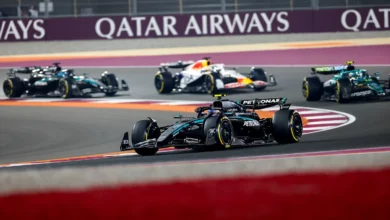
F1 execute engine rule shakeup for 2027 and 2028 to rescue qualifying pace
Formula 1 and the FIA confirm an emergency engine rule change for 2027 and 2028, shifting power back to the ICE


Following an extraordinary meeting, the FIA, FOM, and teams have agreed to a sweeping package of technical, sporting, and financial amendments for 2027 and 2028 to fix the energy clipping and severe battery-draining flaws exposed at the start of this F1 season.
Shifting the power balance back to internal combustion
The immediate mid-season intervention aims to completely rebalance power delivery, ensuring drivers can push to the absolute limit for flat-out Qualifying laps without compromising Sunday’s racing product.
To achieve this, the sport is abandoning the rigid 50/50 power distribution originally intended for 2026. Instead, F1 will transition through a staged process that steadily restores supremacy to the internal combustion engine while altering the behavior of the hybrid systems.
For the 2026 baseline, the internal combustion engine is set at 400kW. But this will increase to 420kW in 2027 alongside a 5% fuel flow boost, before climbing to 450kW in 2028 backed by a cumulative 13% fuel flow increase.
This aggressive scaling steadily alters the final power ratio from a 53% combustion and 47% electrical split in 2026, to a 58/42 split in 2027, and finally landing on a 60/40 split in favor of traditional fuel by 2028.
Re-engineering the ERS and safeguarding the overtake
This new approach naturally triggers a major tactical redesign for the Energy Recovery System, blending battery preservation with aggressive driver deployment.
While the standard electrical output drops from the initial 350kW baseline down to 300kW during normal running to protect critical battery life over a race distance, the high-intensity Overtake Mode remains firmly locked at a potent 350kW across all three seasons to safeguard wheel-to-wheel passing down the straights.
Drivers will also gain much greater flexibility to actively manage their electrical reserves on the fly, as the maximum harvesting power under braking scales up from 350kW to 375kW in 2027, before topping out at 400kW by 2028.
Because global automotive manufacturers require massive lead times to redesign such complex hybrid components, the FIA is fast-tracking this framework into law to give engineering departments total technical clarity.
The complete regulatory package, which smoothly integrates these powertrain adjustments with refined grid supply conditions and financial cost cap tweaks, will be officially submitted to the World Motor Sport Council for final ratification on June 23.
The RNT Weekly newsletter
Race weekend times, results and our best stories in your inbox. Free, and you can unsubscribe at any time.