Alpine switches its F1 race trucks to biofuel: why a logistics deal matters more than it looks
When a sponsorship stops being a logo and starts being a supply contract


Alpine will run its European race logistics on biofuel. It is the kind of announcement that gets skimmed past, and it is worth stopping on, because it is aimed at the part of a Formula 1 team’s footprint that actually counts.
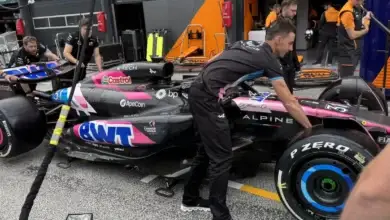
The BWT Alpine Formula One Team is switching the trucks that carry its cars and infrastructure around Europe to HVOlution, Enilive’s diesel biofuel made entirely from renewable raw materials. The change starts this season and the logistics fleet will be running exclusively on it within the coming weeks.
The cars were never the problem
There is a persistent public misunderstanding about Formula 1 and emissions, which is that the sport’s environmental question is about what comes out of the exhausts on Sunday afternoon.
It never was. Twenty cars running for two hours is a rounding error next to the operation that puts them there: the freight, the trucks, the air cargo, the several hundred people who travel to every round. If a team wants to move its own numbers, the fleet is where the number lives.
Which is what makes a logistics fuel switch more substantial than it first appears. It is unglamorous, it will not appear on a livery, and it addresses a materially larger share of the footprint than anything done to the race car.
What HVOlution actually is
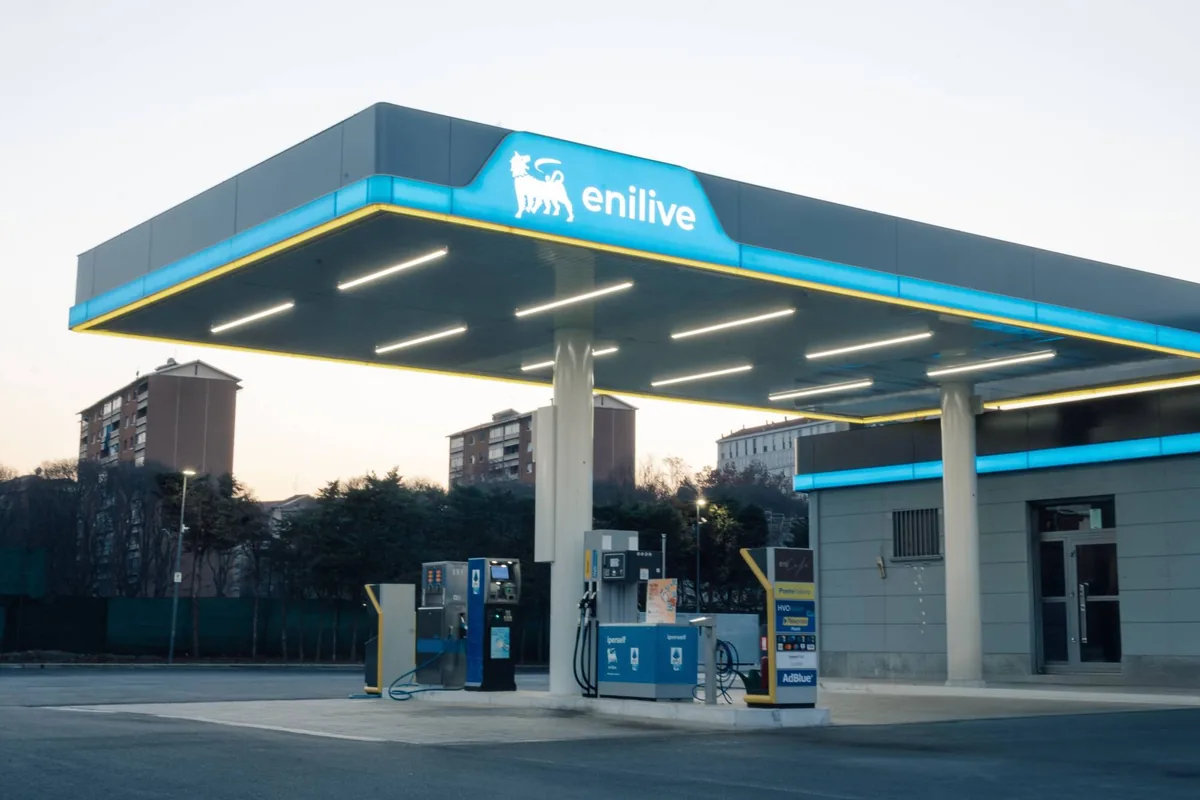
HVOlution is a pure HVO — hydrotreated vegetable oil — produced at Enilive’s biorefineries in Venice and Gela, mainly from waste and residues such as used cooking oils and animal fats.
The commercially important word is drop-in. It requires no modification to engines and no modification to distribution infrastructure. The same trucks, the same pumps, the same everything.
That is the entire reason this deal is possible now rather than in five years. A fleet conversion that required new vehicles would be a capital project with a business case, a depreciation schedule and a board discussion. A fuel that works in the trucks you already own is a procurement decision. Refuelling runs through the Multicard system across a network of more than 1,700 Enilive service stations, which is the other half of why it works: the fuel has to be available where the trucks already stop.
On the emissions figure, Enilive states that in 2025, across the entire value chain, the average CO₂eq reduction of its HVO was 79.5 per cent compared with the reference fossil mix, calculated under the conventional criterion of the EU Renewable Energy Directive.
It is worth being precise about what that means. It is a value-chain figure under a defined methodology, weighted across the feedstock batches actually processed at the two biorefineries. It is not a tailpipe measurement, and the number moves with the feedstock.
When a sponsorship becomes a supply contract
This is the part that interests us most, and it is a pattern worth watching across the paddock.
The agreement sits inside the wider partnership between Eni and BWT Alpine, which brought Eni back into Formula 1 last year as the team’s Official Energy and Fuel Partner. That began, as these things do, as a sponsorship: money and technology in exchange for visibility and association.
What has happened since is that the relationship has moved into the team’s operations. Eni is no longer only a logo and a fuel supplier for the race car; it now supplies the fuel that moves the team. The partnership also covers joint development of biofuel for top-level motorsport, which points further in the same direction.
That progression — visibility, then technical collaboration, then procurement — is how the most durable partnerships in this sport are built. A sponsor whose product is embedded in how the team physically operates is considerably harder to replace than one whose contribution is a decal and a hospitality allocation.
Flavio Briatore, the team’s executive advisor, said as much in his own way.
“Implementing HVOlution by Enilive in the Team’s Logistics activities is another important collaboration we have built with our valued partner Eni,” Briatore said. “What began as a strong partnership around energy and fuel technology is becoming increasingly more strategic. The introduction of this new project demonstrates a collaboration that is built on trust.”
For Enilive the calculation runs the other way. Stefano Ballista, the company’s chief executive, was direct about the commercial return.
“This initiative reinforces Enilive’s position as a key partner for sustainable mobility, making a tangible contribution to decarbonizing the logistics of one of the world’s most popular and innovative sports championships,” Ballista said. “At the same time, it provides international visibility for HVOlution, our biofuel capable of accelerating the decarbonization of a large share of diesel-powered vehicles and already widely available at Enilive Stations across Europe.”
Read that second sentence again. Formula 1 is being used here as a demonstration site for a product sold to fleet operators who will never go near a race track. That is a legitimate and rather clever use of a sponsorship, and it is a long way from buying awareness.
The limit worth remembering
One caveat belongs in any story about waste-based biofuel. HVO made from used cooking oils and animal fats is constrained by how much of that material exists. It is an excellent answer for fleets that can secure supply, and it does not scale indefinitely to every diesel engine in Europe.
That does not diminish what Alpine is doing. It does mean the interesting question is not whether one Formula 1 team can run its trucks on it, but who gets the supply when everybody wants it.
More in our Motorsport Business section: what Adrian Newey’s ownership stake at Aston Martin actually means.
Quotes and technical detail from the BWT Alpine Formula One Team and Enilive announcement. Photos: BWT Alpine Formula One Team / TWJB Photography.