Ford LMDh shakedown at Paul Ricard is here
Campbell, Sargeant and a Coyote V8: Ford's 2027 Le Mans weapon has finally turned a wheel in anger.


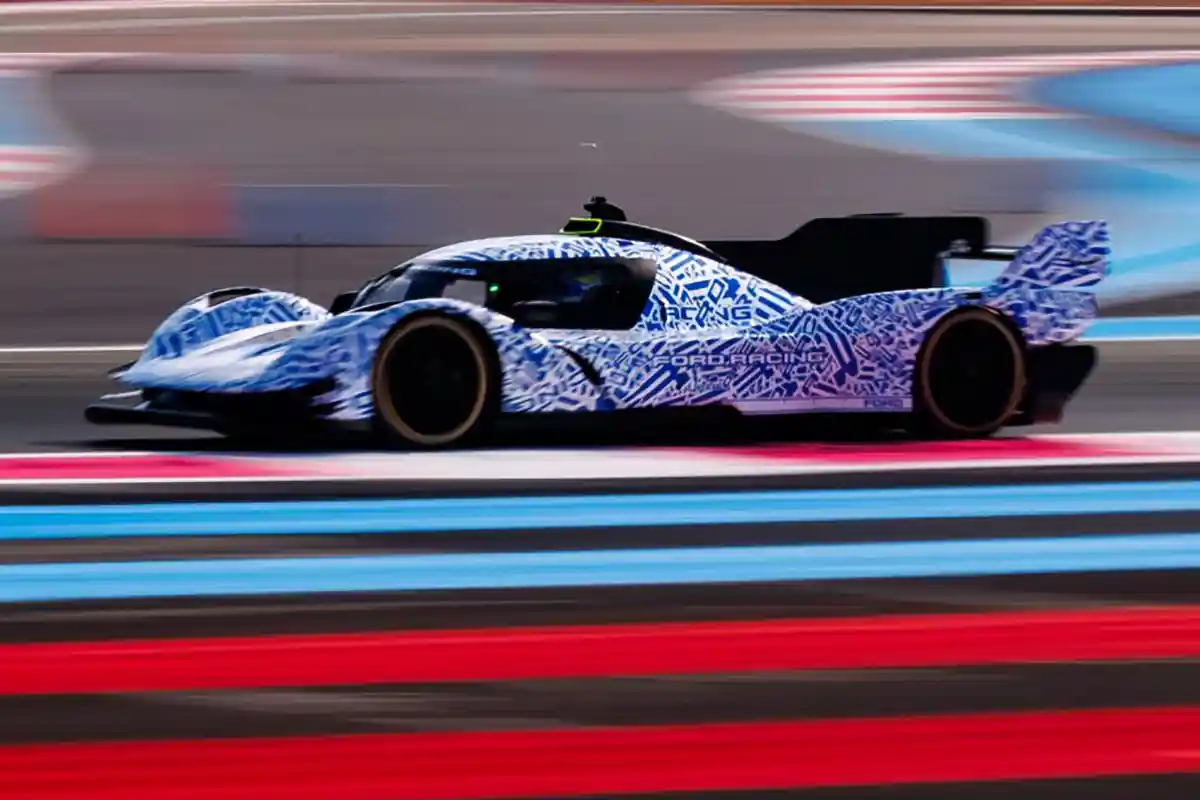
The Ford LMDh shakedown Paul Ricard happened on Monday 17 August 2026, and the Blue Oval’s endurance racing comeback is no longer a press release. It is a moving object on a racing circuit, and that changes everything about how seriously you take this programme.
In this article
Ford LMDh shakedown at Paul Ricard: what actually happened
Ford’s brand-new LMDh car performed its maiden shakedown at Le Castellet ahead of its World Endurance Championship debut in 2027, with Circuit Paul Ricard chosen because it sits close to the headquarters of chassis partner ORECA.
That is not a coincidence of scheduling. It is a reflection of how deeply the two organisations are working together at this stage of development, where every kilometre of data needs to flow back to the people who designed the structure underneath the bodywork.
The 5.4-litre naturally aspirated V8, derived from the Coyote engine and built and tested at Ford’s Dearborn facility, was fitted to the chassis and started for the first time last month, with full track testing formally commencing on 5 August after several days of running-in tests that the team described as going “smoothly and according to plan.”
The first run was focused on checking the car’s systems rather than setting lap times, with the team using the shakedown to verify that the powertrain, electronics and other systems were working together as planned. No one is chasing sector times at this stage. The goal is simply to confirm nothing catches fire and that the data makes sense. Ford cleared that bar.
Why the Paul Ricard Ford LMDh shakedown changes the timeline
There is a detail here that the casual WEC fan might not immediately appreciate. ORECA is now working on its fourth LMDh partnership, having previously supplied the chassis to Acura, Alpine and Genesis. That depth of experience is a genuine advantage for Ford.
The French constructor has already made the mistakes and solved the problems that typically punish a new entrant in a sophisticated hybrid prototype class. Ford is not starting from a blank sheet on the chassis side. It is starting from a chassis architecture that has already proved itself at the front of Hypercar grids.
What Ford is doing from scratch is the engine. The car is powered by a 5.4-litre naturally aspirated V8 derived from Ford’s Coyote engine, built and tested at Ford’s Dearborn facility before being fitted to the chassis for the first time last month.
naturally aspirated V8 in a world of turbocharged units and complex hybrid systems is a bold technical statement. Whether it becomes a competitive advantage or a limitation will only become clear once the car faces a stopwatch, not a systems check.
When the 2027 World Endurance Championship kicks off in Qatar in March, Ford plans to be right there on the grid with a new prototype. The Qatar deadline is tight. Less than seven months of testing remain before the car needs to be race-ready at a level that can compete with Ferrari, Toyota, Porsche and Cadillac from lap one.
On that note, if you follow the wider motorsport landscape, the Cadillac F1 leadership situation is a reminder of how quickly manufacturer programmes can be disrupted by internal instability, something Ford would be wise to avoid as its own endurance operation scales up.
The six-driver squad Ford is betting its Le Mans return on
The prototype completed its first shakedown on Monday, with Matt Campbell and Logan Sargeant sharing driving duties. Tom Blomqvist and Mike Rockenfeller are due to join the testing programme in the coming days, while Nick Yelloly and Sebastian Priaulx are also part of Ford’s confirmed driver group.
Blomqvist’s presence deserves a closer look. He brings existing experience of racing an ORECA-based LMDh platform through his role as an Acura IMSA WeatherTech SportsCar Championship regular, which means Ford has a driver who can describe exactly how one of these cars behaves under load, at night, on worn rubber.
That institutional knowledge is worth more than a fast lap at this point in the programme.
Former 24 Hours of Le Mans winner Mike Rockenfeller, who took outright victory in 2010 with Audi, brings precious experience to the campaign. Six drivers, a mix of Le Mans pedigree, prototype knowledge and raw pace. Ford has not assembled a team for practice runs.
What the bodywork tells us already
The prototype ran in blue-and-white camouflage with “Ford Racing” lettering and a black fin, and its very low nose features a Ferrari 499P-style profile, although it lacks the wing that runs across the top of other ORECA-based models.
Ford previously confirmed that its European testing programme would focus on performance, reliability, hybrid-system integration and aerodynamic validation. The aerodynamic choices are already diverging from the established ORECA template, which suggests Ford’s technical team has a specific downforce and drag philosophy in mind rather than simply copying what Acura or Alpine have done.
The car does not yet have a name. Competing in the Hypercar class, the Ford-powered, Ford-built and Ford-raced prototype will make its Le Mans debut in the event’s 95th running in June 2027. Ford president Jim Farley was unambiguous when the programme was announced: “We are coming back to Le Mans to win, and we aren’t making that a secret.”
Women’s motorsport has its own momentum building alongside these manufacturer programmes, and Jamie Chadwick’s Le Mans Hypercar debut showed just how fast the landscape is shifting at the top of endurance racing.