How McLaren is catching Mercedes with 2026 upgrade
McLaren has reset its development path and set a clear window to close the gap to championship leader Mercedes before the summer shutdown.


McLaren catching Mercedes with its 2026 upgrade push is now the team’s number one priority, and the Woking outfit has set a firm timeline for when it expects to close the gap. Team principal Andrea Stella has laid it all out after a difficult British Grand Prix weekend at Silverstone.
In this article
McLaren catching Mercedes: the honest gap at Silverstone
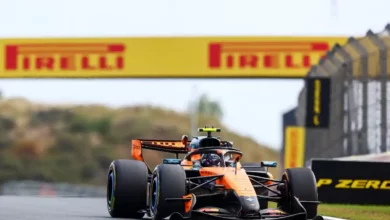
McLaren’s difficult start to its double title defence continued at the British Grand Prix, with reigning world champion Lando Norris finishing fourth and Oscar Piastri ending up out of the points after first-lap contact.
Despite a solid points haul from the weekend, McLaren was well off the pace of frontrunners Mercedes and Ferrari, with Stella putting the gap to its main rivals at around “half a second” and describing P4 in the grand prix as an “overachievement”.
The reigning Constructors’ champions are 154 points down on current leaders Mercedes, with a sizeable gap between them and Ferrari as well. That is a painful number for a team that won both titles just a year ago.
You can read more about Norris admitting McLaren simply was not good enough at Silverstone in our dedicated report.
Why McLaren’s upgrade direction needed a reset
McLaren team principal Andrea Stella confirmed a change of direction for his side’s approach to upgrades during the 2026 Formula 1 season. He called it a “redirection.” That word matters.
Stella revealed that McLaren adopted some conceptual directions during development that, as the team learned more about the 2026 regulations, required redirecting. From an aerodynamic point of view, this is not something that can converge in the space of a week. It normally takes one or two months, and Stella believes that is the delay McLaren currently carries.
Stella believes the team’s best chance of turning around its difficult 2026 season will come with a major upgrade push either side of Formula 1’s summer shutdown. The Hungarian Grand Prix is now the key target for the first step forward.
Stella also conceded that part of the reason for McLaren’s current struggles is that last year the team lost some momentum on the 2026 project because it was embroiled in the title fight, with Norris coming out on top against his team mate and a late surge from Max Verstappen.
The customer team problem at the heart of it all
There is another layer to this story. Being a Mercedes customer in 2026 has turned out to be far more complicated than it ever was before.
The FIA guarantees customer Formula 1 teams access to the same power unit specification as the works outfit, but the complexity of the 2026 systems has placed experience at the forefront. In the McLaren case, the real difference no longer lies in the hardware, but in how effectively it is exploited.
In modern F1, the advantage enjoyed by a works team is no longer defined simply by access to the engine itself. Increasingly, it lies in the expertise accumulated through developing, calibrating and managing a more sophisticated technology. It is an advantage that cannot be measured on a dyno, but one that can become decisive whenever extracting the final few tenths from a power unit makes the difference.
On top of that, McLaren is yet to receive the latest upgraded Mercedes power unit specification. While Mercedes introduced its newest engine at the Austrian Grand Prix, focused on reliability improvements, Williams and Alpine have since moved onto the updated unit at Silverstone, but McLaren remains the notable exception.
We broke down how Mercedes’ electrical qualifying trick works, which is another example of the software edge the works team currently holds over its customers.
McLaren catching Mercedes with its 2026 upgrade push
Stella is not making excuses. He has a plan. The first step in the recovery plan will be made at the Hungarian Grand Prix. After that, the summer shutdown gives the factory time to consolidate the gains.
Stella sees a gap of about two to three months between McLaren and the top teams in terms of upgrade delivery. But he believes McLaren now has a clear direction in development, and it took a couple of months for that to be realised.
Stella also pointed to a Mercedes qualifying technique noticed on the telemetry. After seeing it applied by Antonelli in sprint qualifying, Stella admitted it was something McLaren had not discussed and was not sure was available to them, as it likely requires further elements to use in the power unit. He confirmed that conversations are ongoing with Mercedes HPP to make sure McLaren uses everything available in what he called a “really great piece of technology.”
Norris already flagged the delay months ago
Here is something our editors flagged from within the paddock. The gap between McLaren and Mercedes has been painfully visible in recent races. Both McLarens have clearly not been matching the pace of the Silver Arrows, and that is something that has to change fast. Norris himself already acknowledged earlier in the season that McLaren was running roughly three months behind in development. That lines up exactly with what Stella confirmed at Silverstone.
For a team of McLaren’s resources and recent track record, being that far adrift in the development race is a serious alarm bell. The fans and the paddock have noticed. Now, the team is saying the right things. The question is whether the upgrades arriving around Hungary and the summer break deliver what Stella is promising.
Zak Brown has stayed optimistic publicly. “We have some work to do,” he admitted, but added: “We will catch up. I think we’ll be winning races this year.”
For more on the wider technical battles shaking up F1 in 2026, check out our piece on the FIA Macarena wing safety probe that has also been causing headaches across the grid.
Stay on top of all the championship standings and how McLaren’s points gap to Mercedes is evolving on our 2026 British Grand Prix results page.